Posts Tagged ‘writing yoga’

A light unto oneself

June 20, 2013

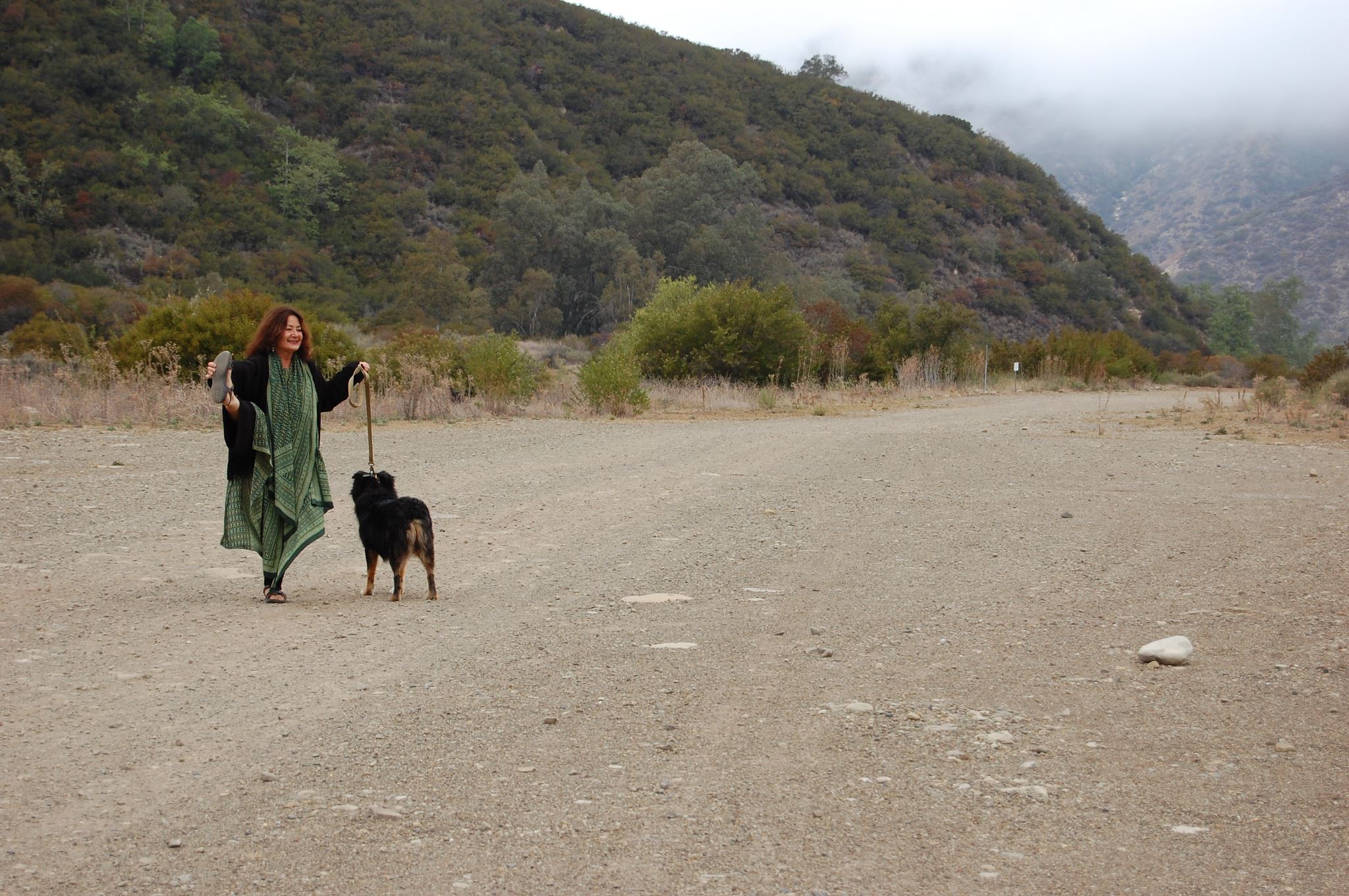
It’s a wild, whirling, windy, summer solstice night! There are pockets here in the river bottom where the wind blows from the direction of Matilija Canyon with such fury that I feel like I’m walking into a powerful storm—a wonderful, cleansing, ecstatic cosmic storm. I don’t resist the power of the wind—just reach for my earlobes to make sure my earrings don’t blow away.

I turn my face toward the sky so I can feel the wind on my skin like a thousand kisses . . . I stretch my arms wide in all directions, breathe deep, spread my rib cage (the wings of the body), and open my chest to the full force of the wind.

When I turn around, I feel the force of the wind on my back and she pushes me home. Then I look up, and there is the feminine face of the Moon Goddess, the Mother of the Universe, smiling down on me. We might be tiny little human beings in a vast infinite universe, but women, through all the stages of life, are forever connected to the cycles of the moon.

And we might even say, since we’re aiming to balance the male and female (sun and moon) aspects of ourselves, that men, too, are attuned to the cycles of the moon.

All the while that I’m teaching my yoga classes, usually laughing as I encourage students to face the layers of hidden pain and stiffness buried in the body, I also try to convey that Hatha Yoga is not just physical Yoga. The Sanskrit word “ha” stands for the sun, and “tha” stands for the moon. . . The moon being the reflected light of the sun, consciousness (tha) is the reflected light of the soul. Knowing and realizing this for oneself is Hatha Yoga.

On this cosmic, windy night, that to me is the meaning of being a light unto oneself.

332041_247554208626532_1705778904_o

Every creature loves its life as much as we do

June 18, 2013

467405_10150743640074703_301792493_oCommunion with nature . . . that’s when you’re walking in the boonies and you feel the veil of worldly worries lift, and you slip underneath and step into the twilight realm where all of creation is smiling back at you. That’s when your eyes open to the landscape infused with the gold light of the setting sun and the bright moon directly overhead. That’s when you can face the futility and still feel the wonder of it all . . .

We walk, savoring this evening off. In the quiet distance you can hear the faint laughter and happy screaming of children playing. New beings at the beginning of life. For a moment it’s as if you’ve already stepped off the Earth plane, and you’re hearing those sounds from far, far away.

After a while I stand still. I stand in the center, communing with the strong, steady, darkening mountains, watching lights in distant houses go on. I feel the layers of night silence descend. The last sounds of the day fade away, and now comes the cricket chorus of night.

As I lean into the boulder near my house and scribble what I feel, I think of the dogs at the pound, cheated of their last day on Earth, cheated even of a last loving embrace, betrayed by man. Man who has the genius to fly to the moon but who can’t stop the habitual killing machine.

As my heart bursts, what suddenly comes to mind is that wonderful Beatrice Wood quote: “When the bowl that was my heart was broken . . . out came laughter.” Beato, who in truth loved dogs more than pots, chocolate, and young men—and who taught that every creature loves its life as much as we do.

Forty years ago I stood in the Gateway bookstore in the Ojai Arcade . . .

June 13, 2013

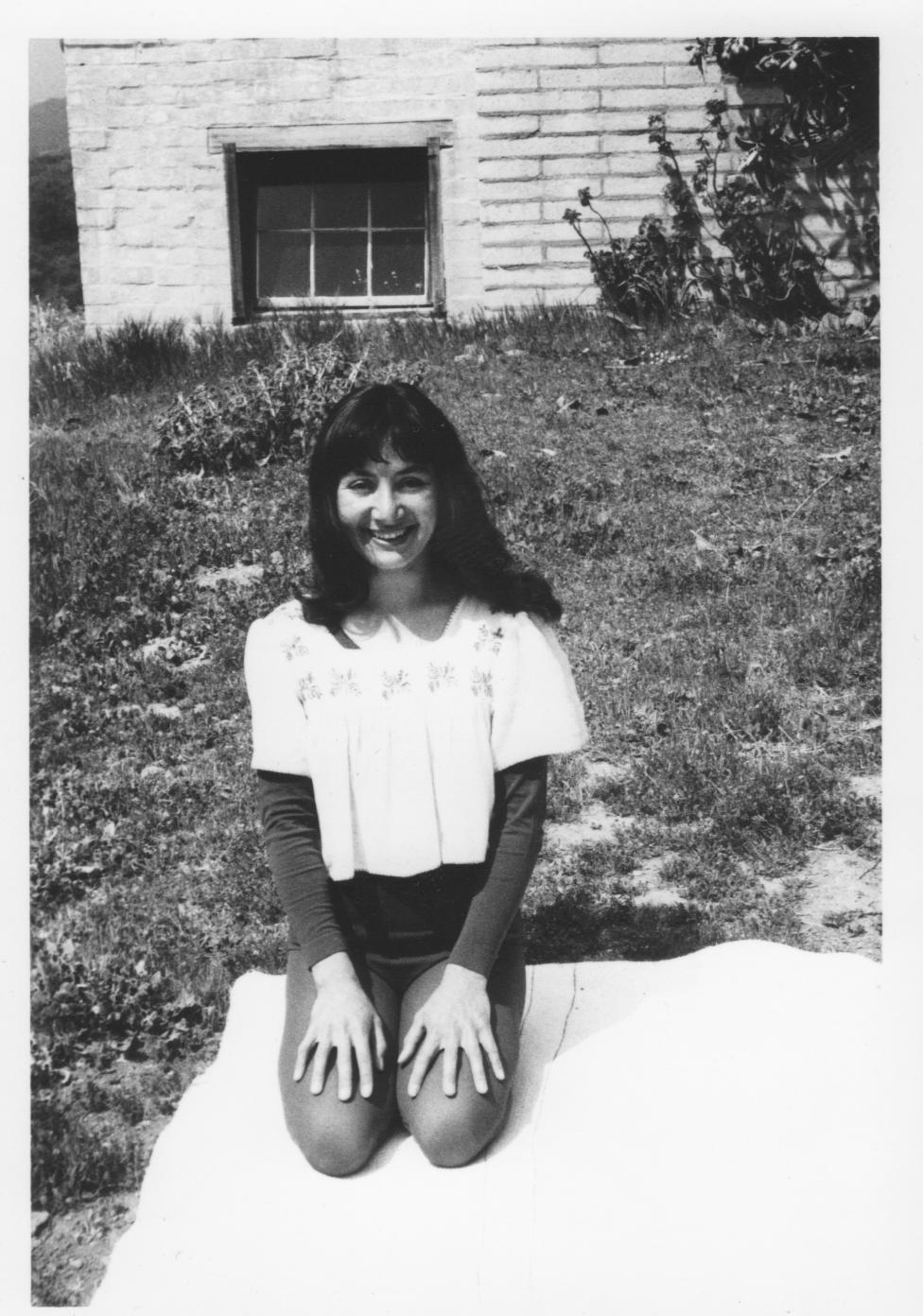
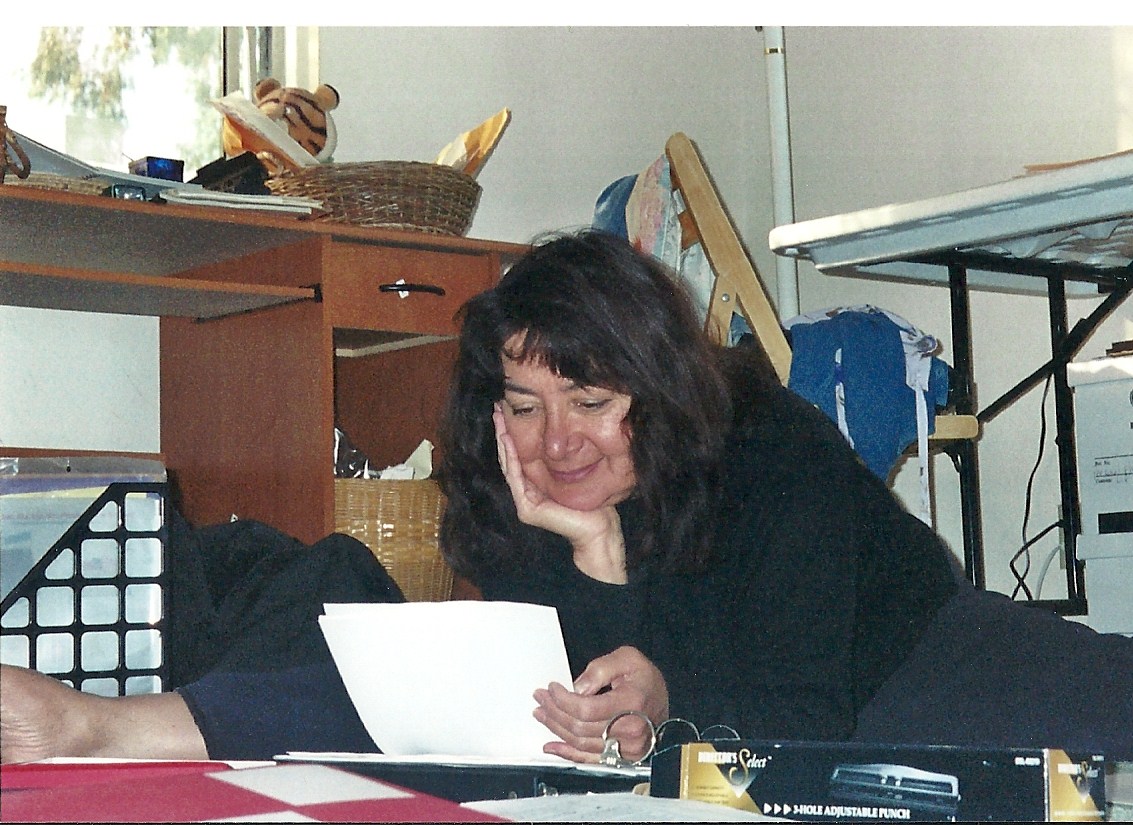
suz10Forty years ago I stood in the Gateway bookstore in the Ojai Arcade reading a bulletin board notice announcing a nine-month Yoga Teacher Education program in San Francisco. (By the time I graduated, the nine months had evolved into a four-year program.) I had fallen into teaching yoga at the Gables, the Woman’s Club, and the Art Center, and, until that moment, hadn’t realized I needed to go to yoga school. But, reading the program flyer, it dawned on me that it might be good to learn some anatomy and take some kind of training.

I needed $500, a small fortune at the time. As a single mom with a five-year-old son, I did not have that kind of cash lying around. So I placed a small ad in the Ojai Valley News right by my weekly health column (the editor, Fred Volz, allowed this appeal), stating that if someone would lend me $500 for teacher training I would come back to Ojai to teach. Miraculously, a reader of my weekly health column called the paper and delivered a check.

When I got to the Institute for Yoga Teacher Education, (via hitching a ride in the back of a friend’s camper) I asked the director if I could skip Asana I and II and go directly to Asana III because I had been teaching a year or two (out of Richard Hittleman and Lilias Folan books). More important, I could afford to stay only for one semester. She laughed at my naive assumptions and insisted I had to start at the beginning like everyone else.

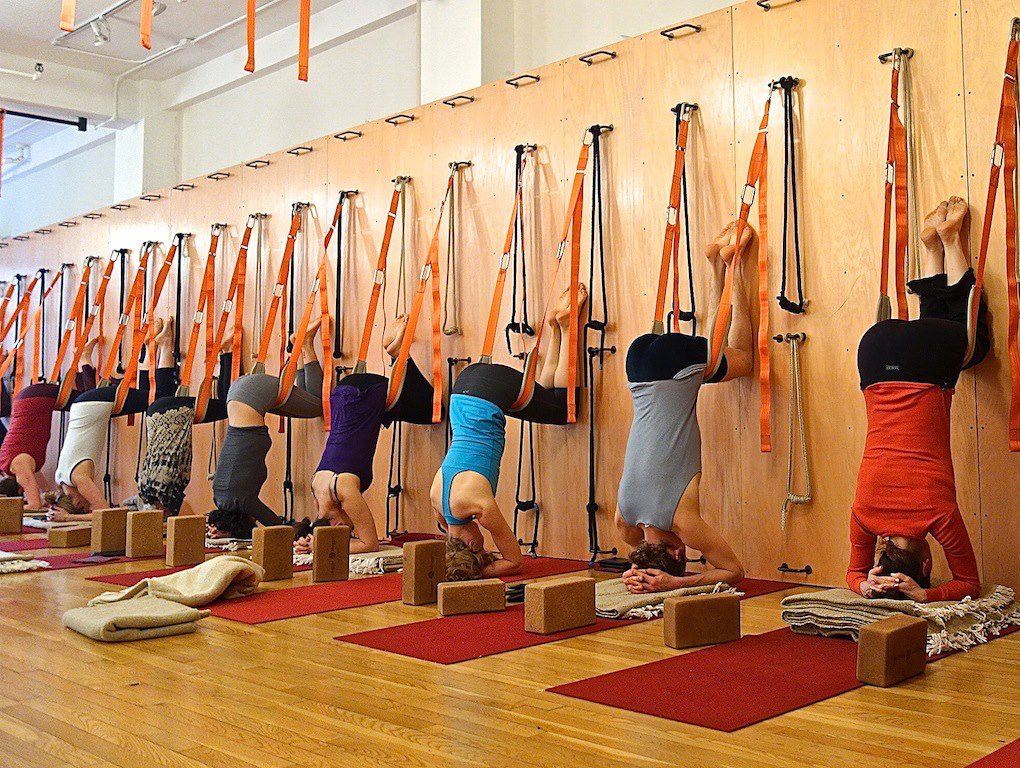
I thought I was flexible, but my memory of that first Iyengar asana class is that, when it came time for seated forward bends, the teacher had me sit on a stack of books or some primitive hard wood block (professional yoga blocks had not yet been invented), put a strap around my feet, and instructed me to feel if my vertebrae were poking out. It was all overwhelming, classes were three hours long, and when they finally laid us to rest in Savasana, for reasons beyond my understanding silent tears flowed like a river down my cheeks.

By the end of the first semester I knew enough to realize I needed more training and for the next five years I found ways to make trips back and forth to the Bay Area until I had enough credits to graduate from the Iyengar Yoga Institute of San Francisco. Those early, basic, step-by-step beginning-yoga classes gave me a strong foundation and planted the seed of yoga deep in my core.

Last night, as I hung upside down to decompress my spine and replenish my energy reserves, I felt so lucky all over again to have this great holistic health resource in my life.

705026_10151733275744703_1301704918_o

The marsh is dry now

June 3, 2013

470591_10150741641279703_266408929_oThe marsh is dry now; the creek bed and all the secret trickles of water are no more. It was hard to extricate myself—I felt sad and guilty—but I cancelled the last lesson. I felt so tired, I had to come here to replenish myself. I had to sit still on the warm ground and stare at the waving stalks—still green, but the front row already turning yellow. I had to come here and listen to the twilight symphony.

As I sat, a flock of birds flew overhead. They swooped and darted like bats—dozens of dancing black silhouettes etched against the twilight sky. I had to come here and see the sweet yellow mustard once more, for myself, before it all dries up.

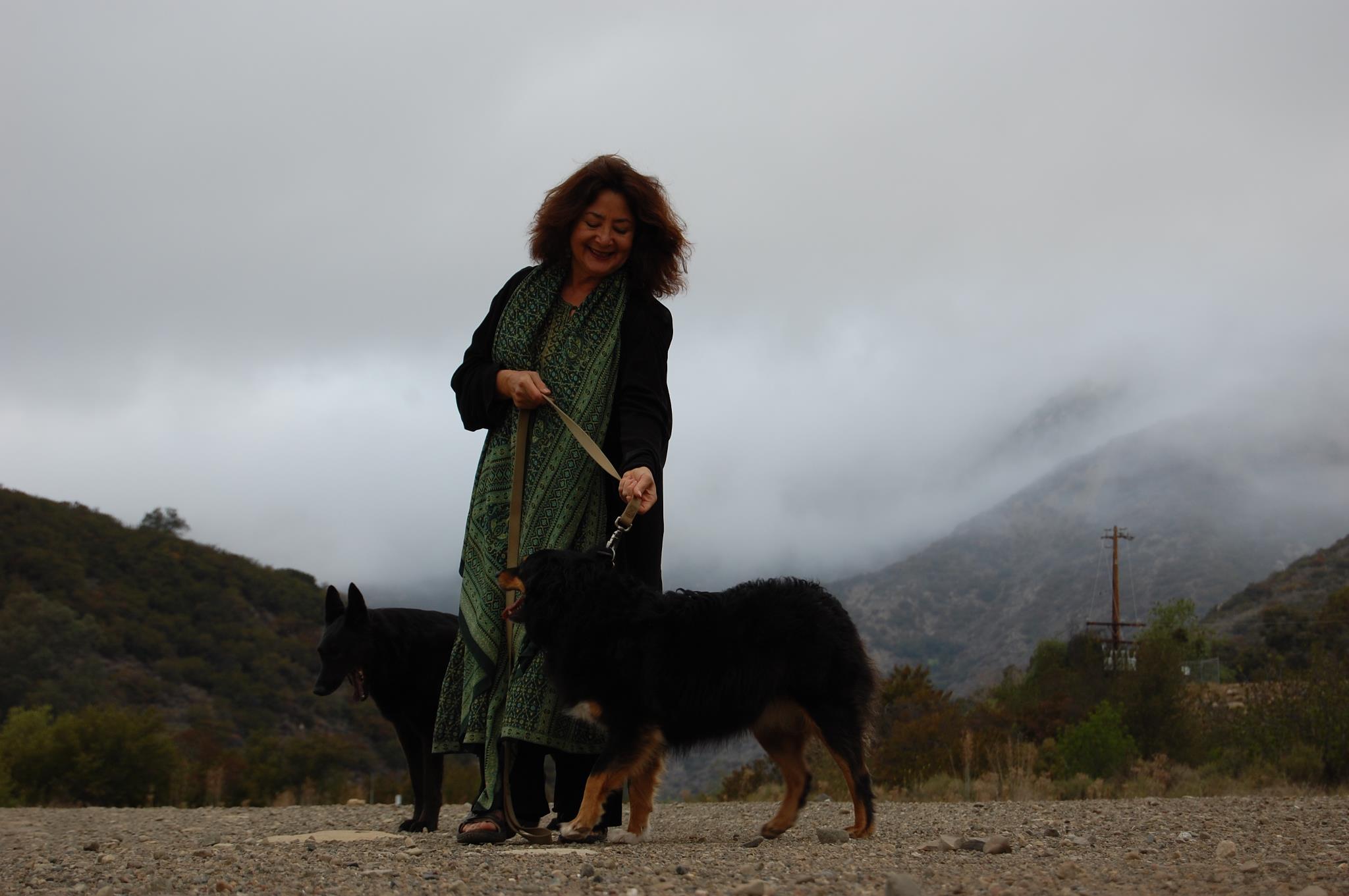
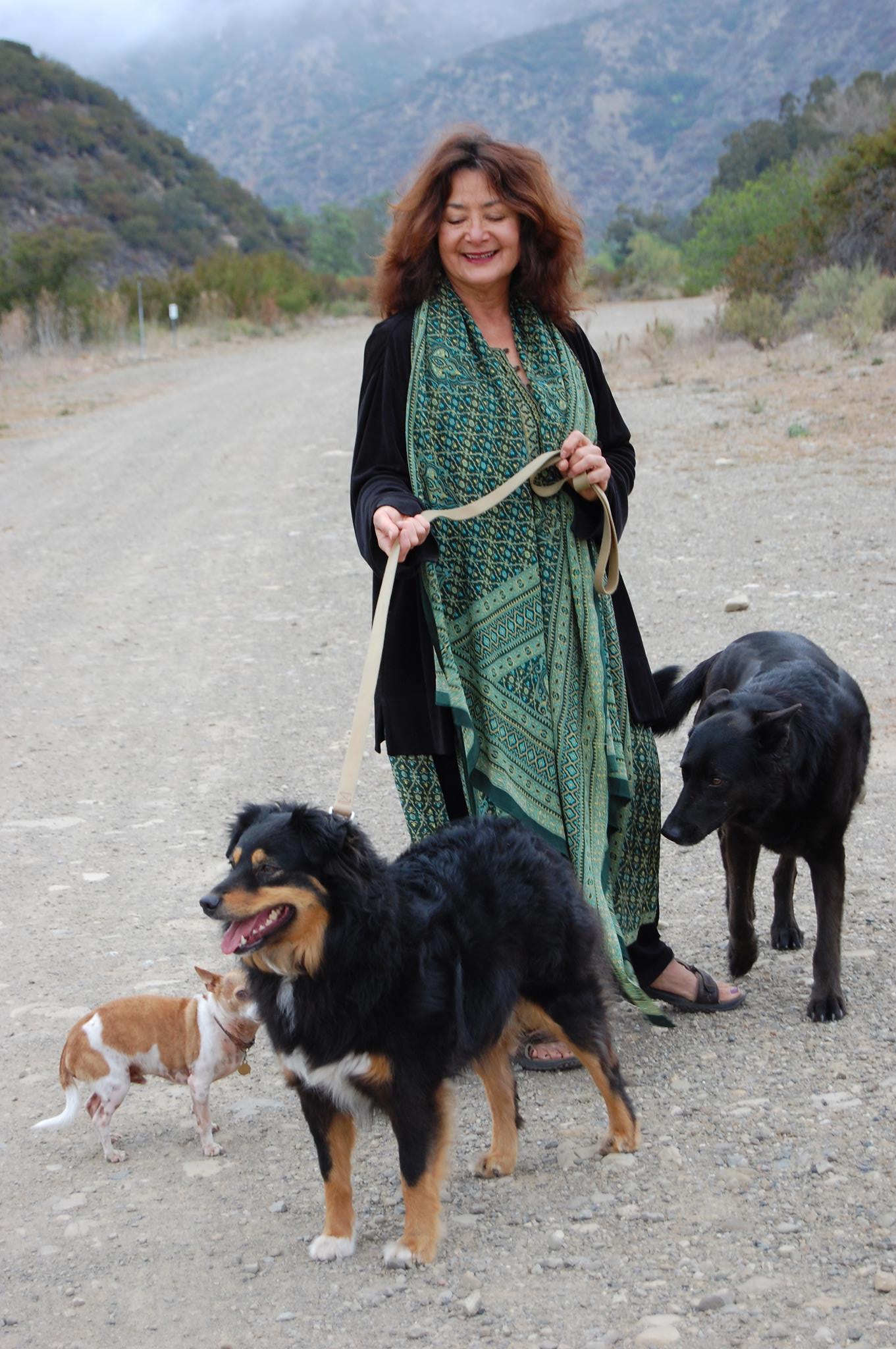
It’s Sunday night, it’s June, and here I am with Honey, Nubio, and Chico. After I let them run wild they sit still, close by. I feel their animal consciousness. I watch their heads turn side to side, ears alert. I see their eyes staring . . . whatever it is, I want to see it, too. And all the while the sky grows darker and the clouds, the mist, rolls in.

The river of life has washed me ashore here. Life is not done with me yet, and I’m not done with life. But without my nature refuge the fatigue is overwhelming. I feel ready for the long sleep. I want to be a hermit. I want to hole up and write and clear my head, but I had a wake-up call. The doctor was going to open up my young niece’s crooked spine and fuse her vertebrae. It gave me a jolt and pushed me back into the teaching game. The commercial world is pulling yoga apart. I want to hide till this phase passes, but humans need to know their bodies from the inside out. So I’ll keep teaching, even if insurance doesn’t pay for it.

Now the wind is blowing. The night is falling so sweetly. The dry marsh is full of birds—more and more birds gathering for the night. Their symphony is enchanting. As the ears open you hear them calling back and forth. We are so quiet; as the land grows still, we grow even more still. We are so silent I half expect a coyote or bear to emerge from the marsh, but the very presence of my pack keeps them at bay.

Nature is releasing her secrets. The beauty is so intense it’s a tonic for all the horrors I learned of this week. My heart is still recovering from the story of the little girl who didn’t survive her “wedding night” to the tribal chief. And the harsh truths I just learned about horse racing. Man’s cruelty and perversion knows no bounds.

On this night I stayed till all the daylight was gone. It was like death—a good death. I stayed till the night grew cold, till cold winds blew over the dark landscape and pushed me back to my nice warm nest.

420152_10150741781489703_1319035889_n

You have to learn to walk away from it all, or the psyche can’t bear it any more

May 28, 2013

420152_10150741781489703_1319035889_nIt was a most celestial evening. I walked through the gate, just past my little writing-yoga animal-shelter hideaway, Honey leading the charge, and was instantly transported. Like a snake shedding her skin, I let go of my endless overwhelming earthly tasks and stepped into an open landscape surrounded by a circle of pink-orange-hued clouds—clouds like angel wings, spreading in all directions . . . east, west, north, south.

The beauty of the early evening was so intense that it quickly cleared my head. You have to walk and walk in nature, and learn to walk away from it all, or the psyche can’t bear it any more.

So many things in life have become like a strange, long-ago dream. The whole sexual drama ebbs and flows with the cycle of the moon. All my little glimmers of hope—false hope—are so quickly dashed now. It’s a painless, peaceful, mystical time. It might not last, but it’s here now.

I’ve so earned the gift of being alone. Of reveling in solitude. The light of dusk—-the in-between-world vibe—lifts the landscape into the realm of the eternal, the land where time stands still. At this hour, for just a little window of time, every step on the dirt path takes me closer to the lightness of childhood—the Garden of Eden.

There will always be a mischievous teenager living inside of me. But tonight, for just a moment, I had the eerie sensation of being maiden-mother-crone, all at once. I could feel the maiden-mother-crone archetype imprinted on my cells—but also like a ghost walking beside me. The crone, the crowning glory . . . I can feel her within reach.

When the night feels this soft and beautiful, I always have a fantasy of not turning around, not coming back. To just keep walking deeper into the creek bed, into the mountains, to sleep like an animal in the bushes, or in some small shelter . . . When I’m very old, I don’t want to sleep in a nursing home with scheduled meals, a TV blaring endless entertainment, and a wrist band in case I wander off. I hope my legs stay strong so I can walk the land like a witch, like an old gypsy woman, and disappear . . .

420152_10150741781489703_1319035889_n

Journal Writing for Self-Awareness at the Krishnamurti May Gathering in Ojai

May 12, 2013

Scan_Pic0018Note: This is Part One of two parts –written quickly while it’s fresh in my mind.

Update, June 12, 2013: The river of life has swept me away —but am aware I haven’t finished this! Will post photos soon!

Update, May 14, 2013: Still working on Part Two. By the time I got home yesterday the heat was so oppressive that I threw in the towel and passed out.

Update, May 25, 2013: The river of life carried me away from my personal writing back to yoga writing, which I’ll post on this blog in the coming days. I also took a four-day focused journal writing workshop at the Krotona Institute in Ojai with playwright and screenwriter Cathrine Ann Jones. The notes for Part Two still sit on my desk,  patiently waiting their turn to be posted, as promised.

There has to be a first time for everything and yesterday was the first time I ever asked a group of people at my Journal Writing for Self-Awareness workshop to actually write. I gave them a few prompts, like “The thing I’m most worried or mad about is . . . ” and assured them that if their hand froze up they could doodle or make a To-Do-List to keep the pen moving.

Much to my amazement and utter delight —thrill of thrills–when I looked around, everyone (about 35 people) was intently looking down at their paper and their pens were moving!

I arrived at the Krishnamurti Retreat around 9:30 a.m., (now renamed The Krishnamurti Educational Center) and unloaded all my books to sell, books to read from, big yoga bolster, mat, blankets, and other props, binder full of notes, my purse, etc., into my old lady shopping cart, so I wouldn’t have to make three trips back-and-forth. Craig Walker, one of the organizers of the event, was sitting nearby under a Pepper Tree, possibly the same tree Krishnamurti meditated under for many years. When Craig spotted me he offered to help schlep everything up the path that led to the Pepper Tree Retreat garden area, where I would be speaking.

I was almost an hour early, just as I had planned, because I wanted to absorb the peaceful atmosphere and get the lay of the land. When I saw that Craig had in mind that I would be speaking at a spot under the canopy with some bushes right behind me, I asked if we could reconfigure the chairs so participants would face out to the lawn area, to the open space, where they could better see the sky, mountains, and tall pine trees. And where I could freely move around and demonstrate the poses I often practice before gluing myself to the chair.

After arranging my books and notes on the table, I got out my yoga props. The lawn was still wet so I spread out a blanket instead of my mat. Then I laid down on my bolster with the soles of my feet together in the Goddess Pose, and closed my eyes. I noticed my heart was beating fast–maybe from the exertion of pulling a cart loaded with forty books slightly uphill, plus the anticipation of doing something new and maybe a bit of anxiety of speaking to an unknown audience. And, to be honest, it was no small feat to extricate myself out of the river bottom, feed and water Honey, Chico, and the cats, clean the kitty litter, shower, get dressed (my friend Sholom says he’s starting to freak out because I always wear the same thing) load up the borrowed car, run back into the house for a banana, and say good bye to Honey all over again . . . etc.

So, lying on my old familiar bolster, I smoothed out my breathing and felt my heart slow down. When I opened my eyes I looked straight up at the branches of the trees and the sky. It just happened that for these few moments all the people were elsewhere on the premises and pretty soon I noticed a bird coming closer and closer to the bolster. Relaxing on the bolster brought me in touch with the sweetness of my surroundings. I stopped worrying about the workshop and by the time people started to sit down around the tables under the canopy I was enjoying a heart opening supported backbend on the yoga chair I’d thrown into the backseat at the last minute

At the end of the workshop I promised participants that I’d describe how the workshop unfolded, the material we covered, including a list of the writing books I read from, which I’ll do later today.

But I will add this:

To set the tone for the workshop, I opened my talk on journal writing with this quote by Jiddu Krishnamurti, from The Book of Life: Daily Meditations

Igniting the Flame of Self-Awareness

“If you find it difficult to be aware, then experiment with writing down every thought and feeling that arises throughout the day; write down your reactions of jealousy, envy, vanity, sensuality, the intentions behind your words, and so on.

Spend some time before breakfast in writing them down, which may necessitate going to bed earlier and putting aside some social affair.

If you write these things down whenever you can, and in the evening before sleeping look over all that you have written during the day, study and examine it without judgment, without condemnation, you will begin to discover the hidden causes of your thoughts and feelings, desires and words.

Now, the important thing in this is to study with free intelligence what you have written down, and in studying it you will become aware of your own state.

In the flame of self-awareness, of self-knowledge, the causes of conflict are discovered and consumed.

You should continue to write down your thoughts and feelings, intentions and reactions, not once or twice, but for a considerable number of days until you are able to be aware of them instantly.

Meditation is not only constant self-awareness, but constant abandonment of the self. Out of right thinking there is meditation, from which there comes the tranquility of wisdom; and in that serenity the highest is realized.

Writing down what one thinks and feels, one’s desires and reactions, brings about an inward awareness, the cooperation of the unconscious with the conscious, and this in turn leads to integration and understanding.”

— J. Krishnamurti, The Book of Life

Books quoted at the workshop and recommended reading:

The Book of Life: Daily Meditations by Jiddu Krishnamurti

Krishnamurti to Himself: His Last Journal   by Jiddu Krishnamurti

Old Friend From Far Away: The Practice of Writing Memoir by Natalie Goldberg

If You Want to Write: A Book About Art, Independence and Spirit by Brenda Ueland

Zen In the Art of Writing: Essays on Creativity by Ray Bradbury (Mine is an older edition. The subtitle has been changed in recent years.)

Writing Yoga: A Guide to Keeping a Practice Journal by Bruce Black

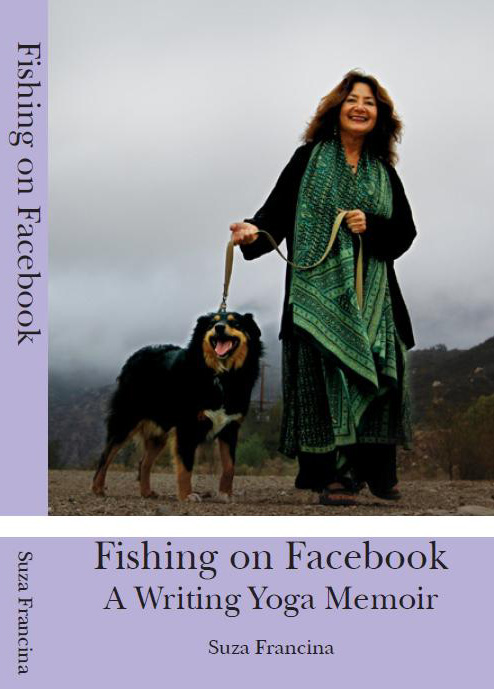
Fishing on Facebook: A Writing Yoga Memoir by Suza Francina

The Way of Story: The Craft and Soul of Writing, by Catherine Ann Jones

Note: This is a listing of books I brought to this workshop–not a complete list of all the writing books I recommend!

Photo credit: Carolyn Studer

(I demonstrated some of the heart-opening restorative poses I often practice before writing)

921563_10200753270770787_1107275179_o

“It is no measure of health to be well adjusted to a profoundly sick society”

May 10, 2013

It is no measure of health to be well adjusted to a profoundly sick society.
~ Jiddu Krishnamurti

I’ll be reading some short passages from Krishnamurti’s journals (as well as my own) at my Journal Writing for Self-Awareness workshop this Saturday morning, May 11, from 10:30 till 12:15. This is a free event, part of the May Gathering at the Krishnamurti Pepper Tree Retreat, on McAndrew Road in Ojai.

I attended Krishnamurti’s talks at the Oak Grove, and also heard him in Saanen, Switzerland, one summer. Over the years I became friends with many of the people who came to Ojai to hear Krishnamurti, including Beatrice Wood, Alan and Helen Hooker of Ranch House fame, and Frank and Bennie Noyes, who started Live Oak School on Orange Road. There, while living in a tiny trailer on the edge of an orange orchard, I tutored, cleaned, cooked, and cared for my toddler son. Back then I had endless energy, and almost everything was great fun.

Alan Hooker used to walk into the kitchen, roll up his sleeves, and make multiple loaves of oat and prune bread. He would also show us hippie chicks how to grind and chop nuts, celery, carrots, onions, and mushrooms for nut burgers or nut loaf.

While I’ve been journaling for more than 40 years (50 if you count my high school and Haight-Ashbury diaries), I’m new at teaching journal writing to people who might feel inhibited when faced with a blank page. I’ll see if I can nudge them into putting their innermost random thoughts and observations on paper. I’m filled with a kind of joyful trepidation, along with curiosity about who will show up.

The nature descriptions in Krishnamurti’s journal, below, are so simple, timeless, and moving. The book consists of observations made between February 25, 1983, and March 30, 1984, toward the end of his life. We here in Ojai can walk the “little village” as well as the East End, Horn Canyon, and all the trails he took high up in the mountains, and see all the places that he described with such depth and sensitivity.

I remember now how many early evenings I would be in my garden on Thacher Road, picking zucchini squash or digging trenches for chicken wire in an endless battle to keep gophers at bay. Krishnamurti would walk by, and the neighbor’s little dog would come running out onto the street, yapping at his heels and threatening his companions. The dog would often follow them a little way down Thacher, and Krishnamurti would turn around, bend over, and, arms waving toward our driveway, tell the little nuisance dog, “Shoo . . . shoo . . . shoo. . .”

This gave me a bit more time to observe Krishnamurti, and sometimes I’d have to run to the street and scoop the dog up. Back then, at age twenty, I was still painfully shy, and never took the opportunity to say a friendly hello.

Today, Krishnamurti’s journals serve to remind me how journal writing not only makes us ever more aware of our automatic thought processes and responses, but strengthens our powers of observation and awareness of ourselves, other people, nature, and all the rest of life:

As you climbed, leaving the little village paths down below, the noise of the earth, the crickets, the quails, and other birds began their morning song, their chant, their rich worship, of the day. And as the sun rose you were part of that light and had left behind everything that thought had put together. You completely forgot yourself. The psyche was empty of its struggles and its pains. And as you walked, climbed, there was no sense of separateness, no sense of being even a human being . . .

From Krishnamurti to Himself: His Last Journal

Krishnamurti’s last journal, spoken into a tape recorder at his home, Pine Cottage, in the Ojai Valley, brings the reader close to this renowned spiritual teacher. Dictated in the mornings, from his bed, undisturbed, Krishnamurti’s observations are captured here in all their immediacy and candor,…

Time for a Little Levity

May 8, 2013

Time for a little levity:

Last Friday I walked into my bank. Way on the other side of the room I immediately spotted “Liz,” the character in my book who blew the whistle on “Adam.” If it hadn’t been for her revelation, who knows how much longer the charade would have played on.

I hadn’t seen Liz in more than two years, and for a second my mind went into a spin. She walked over to where I was filling out my deposit slip and we gave each other a hug.

“I see you got your book published,” she said, laughing.

“Yes, I did!” I replied. “Did you read it?”

“Yes, I did!” she said, with a knowing smile all over her face.

We just looked at each other and laughed as we each remembered the synchronicity of Adam arriving just as she was leaving my Sunday-morning yoga class, and the look on her face when she recognized him.

“I’ve lost all respect for him,” she confided as the teller credited my deposit. We laughed and chatted some more as Honey and Chico ate the biscuits the teller gave them.

“The good thing about writing that book,” I said, “was that I learned how to write dialogue. That book got me going on turning my journals into memoirs.”

Bumping into Liz at the bank made my day. I walked out of there feeling like a wealthy woman.

Health—including mental health—is wealth!

Fishing on Facebook: A Writing Yoga Memoir

Suza_Book_Cover_Front_Only(1)

Elder Care in Ojai: “We Are In Our Own Cocoon”

April 25, 2013

IMG_0922I’m starting to think that the closest I’m gonna get to enlightenment is to get along with my old parents.

If my dad could fire me, he would, but I’m all he has for the night shift. Everything I do is wrong. “You wouldn’t last one day on a job,” he’s fond of saying, as he shows me how to cook and wash dishes. I tried to dissuade him from eating the salmon my middle sister fixed for his dinner four days ago but he polished it off with sliced cucumbers and dandelion greens, dismissing my concerns with war stories about rations of spoiled rice and maggots.

“You are too soft, Suzanne,” he reminds me at least once every visit.

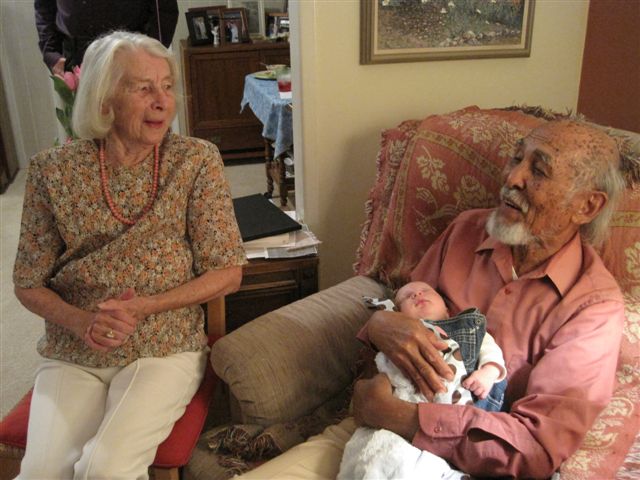
When I arrive this evening at around 6:30, the house is peaceful. I like to spy on my mom and dad through the window before announcing my arrival. My mom is making her way to the kitchen with her walker. When I tap softly on the window for her to open the door, she immediately turns around; that’s how I know her hearing is still good. My dad is dozing in his easy chair. My mom unlocks the door—very happy to see me. She admires the warm cape I’m wearing on this dark, drizzly evening, and notices that for once I’ve combed my hair.

My dad wakes up as soon as I step inside. “I’m a dreamer, Suzanne. I’m dreaming about rambutan and durian [Indonesian fruits]. You remember the durian, Suzanne? At least you got to taste the real fruit . . . ”

He stretches back in his easy chair. “We got it made, Suzanne . . . Can you imagine your mother and me in a rest home? A retirement community? I get these fancy offers in the mail: ‘Meet interesting people,’ ‘golf courses,’ ‘swimming pools,’ ‘all the amenities’ . . .” he quotes with laughing disdain.

Then he recounts yet another tale about visiting his friends in a nursing home.

“You remember Flodeen? She told me, ‘I didn’t know what was happening. They lifted me up out of bed and put me in the washroom . . .’

“Can you imagine?”

“Your mom and I, we do what we like. We sleep til 8 or 9. Every morning your mom stands in front of the window and looks at the mountains. She asks, ‘How did I get here?’ She loves it here. We make a nice breakfast. We sit in the sun. We are in our own cocoon. We got it made.”

On almost every visit, he suddenly says, “I wish I could turn back the clock and take better care of you. But I was preoccupied. I worked all the time. I was in a better position with your youngest sister. I had vacation pay . . .”

My almost 90-year-old dad is processing his whole life. On all these recent visits he’s been telling me more about his childhood in Indonesia. I hadn’t realized till tonight that his family was part of the ruling class. He pulls out a book about Dutch- Indonesians. It has photographs of all the scenes he remembers from his youth. An Indonesian kitchen. “We had a full-time cook, Suzanne. She arrived early in the morning and left late in the evening. That’s just how it was. We had a maidservant who went with us the first time we went to Holland in 1933 or ’34. The boat trip took a month . . . two months back and forth.”

The photographs clearly show that the Dutch were the ruling class in Indonesia and the Indonesians, the indigenous people, were second class. “My father had a good position,” my Dad comments. “We were privileged. But the Japanese beat all the pride out of me . . . ”

On every visit, my dad recounts new war stories. His being one of two or three hundred prisoners moved from the docks to high up in the mountains to work in the coal mines, just a few weeks before the atomic bomb flattened Nagasaki, was a defining moment of his life. He remembers every detail of the horrors from ages 17 to 20. “I was young, Suzanne. I will never forget the sound of that prison gate closing behind us. But I knew that the gate that closes will one day be open again . . .”

It’s now close to 9 p.m., and my mom insists she’s not hungry. I know that the only thing that appeals to her fading 92-year-old appetite is a grilled cheese sandwich with the Dutch cheese she’s eaten almost every day of her life and a cup of warm organic milk. I put my vegan philosophy aside and make her the most delicious greasy buttery sandwich in a frying pan. “Oh, that tastes good,” she says.

Suddenly, with a look of genuine alarm, she sticks out her arm. “What’s that? What a sight is this!” She examines the blue veins bulging out of her thin arms as if seeing them for the first time.

It’s as if she suddenly realizes how very old her body is. I’ve had a taste of that same feeling. All day long, if we don’t look in the mirror, we feel ageless—twenty, thirty—so long as we keep aches, pains, and fatigue at bay.

My mom again stares at her veins. Then she looks up and says, laughing, “I better wear long sleeves.”

I laugh too. “Would you like dessert?” I ask.

“No, I’d rather desert!”

My mom never misses a beat!

To be awake to the miracle of being in nature— that is enough, for now

April 21, 2013

The stack of books by my bed reflect my dual Gemini nature. There is a copy of There are No Accidents: Synchronicity and the Stories of Our Lives, by Robert H. Hopcke, a Jungian psychotherapist who explores all the unexplainable events and curious coincidences that happen in the course of our lives. And, on the opposite end of the spectrum, there sits Why People Believe Weird Things: Pseudoscience, Superstition, and Other Confusions of Our Times, by Michael Shermer, PH.D., the founding publisher of Skeptic magazine, the director of the Skeptics Society (www.skeptic.com), and a contributing editor of Scientific American.

Living here in the Ojai Valley, a hotbed of every belief under the sun, my inquiring, incredulous mind likes investigating both views—the rational and irrational. Back in 1957, when my family was still in Holland and in the process of emigrating to America, my dad told my mom he had a dream about orange orchards. Sometime after this dream, he received a telegram saying that we were going to a place in California called Ojai. My dad still remembers how when our sponsor drove us to our house in the east end, he recognized the orange groves he had seen in his dream.

If you look around, you’ll see that there is no end to the things that people believe in. At around age fourteen I began to question the dogma of the church I was raised in. And now I question the popular belief that there are no victims, that everything that happens is a “soul choice”— for the greater evolution and understanding of the soul. My rational mind cannot fathom how the eight-year-old boy who was blown up in the bomb blast in Boston was making a soul choice —and all the other people blown up elsewhere on the planet that same day.

When I consider the enormity of the suffering and atrocities that have occurred over the centuries, both in the human and animal kingdom, and the magnitude of what is going on in our era, I ask myself, “If it’s true that we’ve all lived many lifetimes, and if we learn from experience, why aren’t we more enlightened by now?”

For me, at this point in life, at the end of nine seven-year cycles (63 years) on the planet, I don’t know anything. And the more I embrace this feeling of not-knowing, the more open I feel to the great mystery that is life.

Tonight, when I walked the river bottom with my pack of dogs, and I saw the fuzzy black caterpillars crawling on the dry dirt path . . . when I saw the shiny black “stink” bugs moving along . . . and when I saw the white and brown flecked birds swooping bravely in front of us, trying to lure us away from their nests. . . and when my eyes caught the incredible ever-changing light that is the gift after sunset as the days grow longer . . . and when I looked up and saw the coming of the soon-to-be full moon, I said to myself, “This is enough.”

To be awake to the miracle of being in nature— that is enough, for now.

462701_10150741764309703_1020063683_o


“It is a bit embarrassing to have been concerned with the human problem all one’s life and find at the end that one has no more to offer by way of advice than ‘try to be a little kinder’.” ––Aldous Huxley