Archive for the ‘Yoga Writing Memoir’ Category

Bike Ride Part Two: Time for a Bath

September 9, 2012

After my trip through Meiners Oaks, I cycle over to my parents’ private, deluxe nursing home on Fairview Road. My timing is perfect, as my dad is trying to convince my mom to wash her hair.

My father and two younger sisters can handle almost every aspect of my mom’s care without me, except for one thing. I am the only member of the family who has succeeded in coercing my mother to sit on her shower stool and actually take a full bath. If you want to know how strong a thin, ninety-two-year-old woman can be, try moving my mom from her easy chair into the tub!

I tell my dad to relax—that I’ll handle giving my mom a shower. But first I have to butter her up. My mom asks the same questions over and over again. She can’t remember the last time she had a bath, what day it is, or who the neighbor is, but she still speaks five languages. Her favorite thing is teaching me Spanish. So I sit on the floor near her easy chair while she reads out loud from her lesson book.

After about ten minutes of Español and joking about my weight (my skinny parents cannot get over how fat I am), I nonchalantly suggest to my mom that this is a good time for a bath.

“A bath? Are you crazy? I don’t need a bath. Why should I take a bath? Do I smell?”

My sisters and I have threatened her a hundred times that if she doesn’t bathe then we will have to hire a stranger or put her in a nursing home. She poo-poos our threats and tells us to leave her alone. “Mind your own business. I can wash myself—I don’t need you!”

I finally get my mom up from her chair. At first she refuses to walk. She yells for my father to save her, and then curses him for being on my side. Then she yells for the police. Finally, she appears to throw in the towel and makes her way toward the bathroom, me right behind her in case she falls. Then, in the hallway, instead of veering toward the bathroom door she walks right past it and straight into her bedroom. “You are not as quick as you think!” she yells gleefully and quickly slams and locks the door.

My best strategy for getting my mom in the shower is to wait till she’s on the toilet and then steer her onto her shower stool right after she gets off the toilet. But it’s too late for that trick today.

Ten minutes later she opens the door, and angrily agrees to have her hair washed in the kitchen sink. I quickly clear the dishes, grab towels and shampoo, stick a basin in the sink, and fill it with water. Despite all her yelling that I use way too much shampoo and her threats to disown me, I love washing my mom’s hair and scrubbing her scalp and neck.

After she’s all rinsed and dried off, with her damp clothes removed and her bathrobe on, she orders me to get out of the house—now!

An hour later my father calls to thank me. I can hear my mom playing the piano in the background, her ordeal forgotten. “She smells so good,” my dad says.

A Bike Ride Through the Past

September 9, 2012

Riding my bicycle through Meiners Oaks feels like a long, strange trip through my past. My conscious mind is present, enjoying the balmy weather, the rural route from the river bottom to Mira Monte, but on the way home, as I pass the homes of childhood friends and other places that shaped me, all sorts of molecules of memory are unleashed.

There’s The Farmer and the Cook, in the building that once housed the five and dime store where I bought my first bottle of miracle Cover Girl make-up (to make my brown skin whiter), pale pink lipsticks, bags of curlers, and endless Noxema creams, hair spray, and lotions and potions to emulate the girls on the covers of Seventeen.

Next door to The Farmer is that house where I once saw my friend’s older sister making out on the couch with her boyfriend. I didn’t know what they were doing, but my Pentecostal brain recognized that this was surely sin!

A few blocks from The Farmer comes the house of my best fifth-grade friend, Brenda, who had diabetes and was short for her age but whom I envied because she was an only child with ten pairs of sneakers in all different colors, with matching socks, and cute matching pleated skirts, shirts, and soft wool sweaters that hung all nice and neat in her very own closet. She had more clothes than I had ever dreamed possible, as well as huge stacks of True Romance  and Archie and Veronica comics that went halfway up to the ceiling. Her parents were alcoholics, but I didn’t notice that . . .

Across from Brenda’s house is the trailer park where after school I helped an old man who was a friend of my parents . . . a lonely man who smelled of Old Spice and wore a St. Christopher medallion . . . a good Catholic who paid me to sweep the oak leaves off the deck, wash his dirty dishes, and help him with his laundry. His cupboards were filled with forbidden foods like Spam and Saltines and Nabisco Vanilla Wafers and Ginger Snaps . . . there was always a bowl of red Jello in his tiny fridge, and whipping cream that you sprayed out of a can—foods not found in my mother’s health-food kitchen. After my jobs were done, we’d sit on a bench at his table and eat goodies together, until one day when I realized I should not be sitting on his lap and what he was doing was wrong. A few weeks later, my mother showed me his obituary in the paper. I can still feel the shame and guilt that washed over me. For years I couldn’t shed the feeling that my abandoning this poor, lonely old man had somehow caused his death.

Rose-colored glasses

September 6, 2012


In 1966 I met a Buddhist couple at Bart’s Books who flat-out told me that I saw the world through rose-colored glasses. This morning, when I woke up after a night of strange dreams and revelations, it dawned on me that I’m finally beginning to grasp what they were talking about.

You could not help but notice this odd new Ojai couple. The woman’s name was Dolly Facter, and she gave me a copy of  her book, The Doctrine of the Buddha. Dolly was a little bitty powerhouse, with a crop of short, wild, white hair and huge black-rimmed glasses. She was probably in her late sixties, and usually clad in black tights, sandals, and a baggy top. Her husband, Richard, a good twenty years younger, was a tall, red-bearded, red-haired hippy-looking fellow who had a knack for making me feel uncomfortable. Always accompanying them on their walks all over town were two big, black, standard-size poodles that Dolly told me were in line to reincarnate as human beings next lifetime.


Dolly and Richard were vegetarians on Dr. Bieler’s Food Is Your Best Medicine diet. No wonder I started hanging out at their house on North Ventura Street, where they fed me big bowls of steamed zucchini, celery, parsley, and green beans, served with thick slices of Ranch House bread slathered in raw butter.

Dolly and Richard tried to plant in my rose-colored teenage mind the Buddha’s wisdom that “Life is suffering.” I didn’t want to believe their favorite expression: “Human beings are a mixture of greed, hatred, and ignorance.” But, this morning, as I thought of the painful childhoods and horrific blows my yoga students have shared with me these past forty-plus years, it struck me that my Buddhist friends were right. I not only saw the world through rose-colored glasses . . . I flat-out refused to take them off.

As the mighty mountains grew darker

September 4, 2012

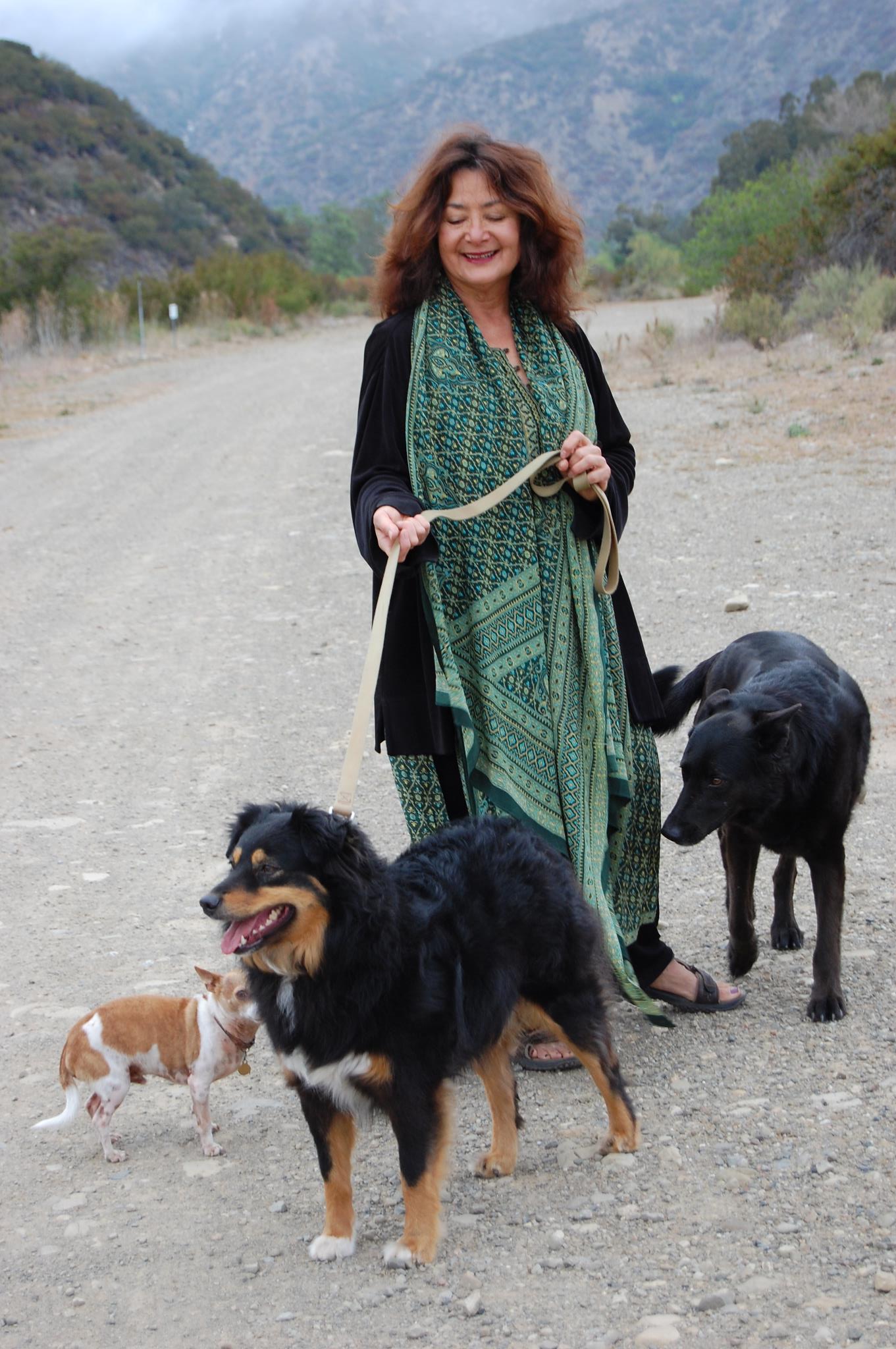
Tonight, as the mighty mountains grew darker, the sky was ablaze—the last rays of sunlight lingered even when the mountains turned pitch black. The dogs and I were late heading out, I having spent the afternoon unpacking boxes of books—like seeing my life flash before my eyes. Books on every subject under the sun . . . fifty years’ worth of books on animal rights, on men and relationships  (most bought when recovering from a broken heart, like Gods in Everyman by Jean Shinoda Bolen), dozens more on the dire state of the world (First Kill Your Family on the child soldiers of Uganda), and all the endless books by every guru that walked the face of the Earth these past fifty years, from Da Free John to J. Krishnamurti to Byron Katie . . . And of course all the yoga books, half by people long gone . . . Books by all my Ojai author friends, going way back to Beatrice Wood . . . Plus piles of books on living lightly on the Earth (Asphalt Nation, The Last Hours of Ancient Sunlight, Green Yoga) and all the great memoirs like My Life So Far and My Life in Orange that helped me during the hard times . . . plus all the books read for sheer pleasure and unbelievable escapes . . .

As I head home and watch the landscape grow darker, carrying Chico, Honey leading the way, I think about letting all my books go, letting all my unessential material possessions go, letting go of everything I identify with, as part of the great cosmic experiment of living on the Earth plane. This I will do before I die—but I’m not there yet!

http://www.facebook.com/photo.php?fbid=10150741781489703&l=dd72f7f3d1

End times

August 31, 2012

Last night I rode my bike in the moonlight to check on my old parents. When I arrived around 9 p.m., the house was all lit up and they were eating enchiladas with rice and beans from Rob’s or Ruben’s. No doors or windows were open, and it felt like stepping into a sauna. My dad was engrossed in a lively conversation with my brother-in-law about end times, the signs of the times, the rapture, and the infinite wisdom of our heavenly father.

My mom had a dubious look on her face; she was leafing through the September issue of National Geographic on “What’s Up with the Weather”—all about record floods, endless drought, and “snowmageddon.” There was also a feature on Yemen entitled “The Days of Reckoning,” with horrific images of war. My mom stopped turning the pages . . . we saw a photo of a 12-year-old boy cradled by his mother. His eyes were not closed; he had no eyes, just sewn slits where once his beautiful, miraculous eyes had gazed out. He had lost his eyes to a sniper. I no longer ask my earthly father why our heavenly father allows this. Instead I found my mom’s walker and nudged her outside to look at the moon.

Early morning walk in the river bottom

August 31, 2012

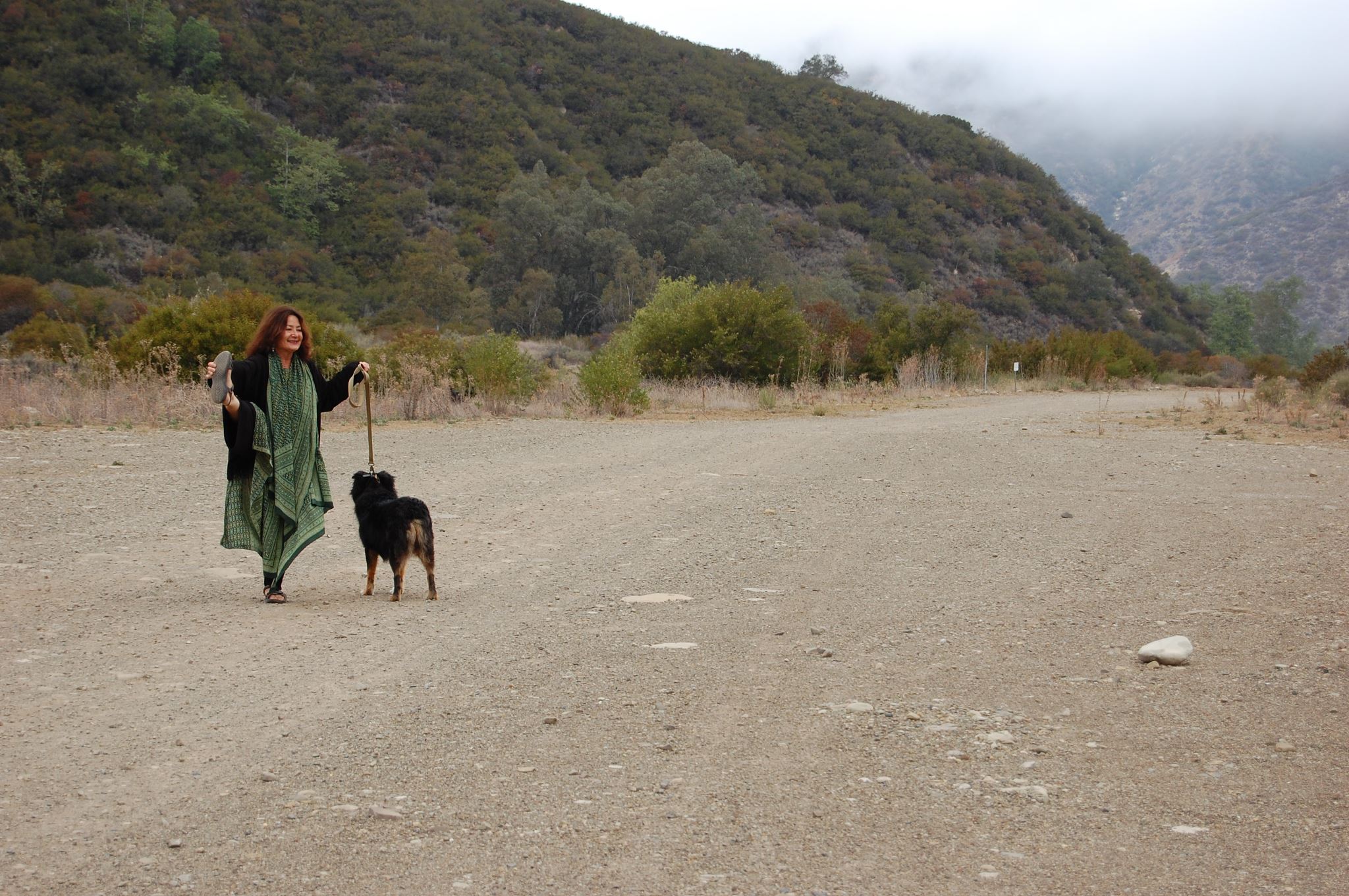
To honor the spirit of Faccia and dogs everywhere, and my human spirit too, I rose early for a walk into the wild. Whistled for Nubio, our black dog neighbor….He soars over the rock wall at the entrance to his home and he and Honey gallop away like wild horses, little Chico giving his all to keep up with their longer legs. Chico knows the ropes. He stops in his tracks so I can leash him to keep him safe from coyotes….

The rising sun illuminates the landscape. The sky is still streaked with grey that soon turns to a palette of orange yellow red pink purple colors….at this moment the blues peeking through the clouds are clear like the first day of creation….I wish for one day on earth that except for emergency vehicles and time-sensitive transport, we humans could have a global emergency car-free day…. that we counted the cost we are paying for our oil-driven lifestyle to the global economy ….

Faccia’s gentle passing

August 29, 2012

Today was the passing of our sweet little Faccia, the dog my daughter Monica adopted fourteen years ago.

Before time caught up with Faccia, she ran like the wind—the happiest, springiest dog on earth—so light on her feet . . . a joy to behold.

About two years ago Faccia’s hearing faded; gradually she slowed down, slept more, and walked less and less, just like an elder person in the last years. Her dog tag said, “THIS DOG IS DEAF.”

These past several months I have been watching Monica tenderly carrying Faccia around the yard like a baby. Her house looked more and more like a nursing home for elderly dogs. Yoga mats, blankets and pillows all over the floors to help prevent Faccia from slipping and to give her a soft place to land when her legs gave out . . . special easy-to-digest food . . . new raised dog dishes to made eating easier . . . barricades and fences so Faccia wouldn’t wander off and get disoriented or run over (one night a car backed over her, but somehow she was not injured) . . . special places to pee and poop . . . washing her when she messed on herself, just like an old person . . . Faccia waking up at night, crying and needing help to go to the toilet—just like an old person.

I said to Monica, half joking and half serious, “The way you take care of Faccia shows me how you might someday be taking care of me.”

Monica held Faccia during the night. We spent the morning quietly gathered around Faccia’s gently snoring body. Dr. Curtis Lewis, our longtime vet who has helped ease the end for many of our elder dogs, came to the house at noon.
Even though we knew the moment was coming, and we were ready, a flood of tears came . . .

Dr. Lewis is so kind and gentle . . . a few times Faccia raised her head . . . we watched the change . . . the final exhale . . . her passing was easy.

All afternoon, Faccia’s dear little doggy body rested under the kitchen table as usual, but her breath was no more.

In the late afternoon, Monica’s husband, Trevor, dug Faccia’s grave. As darkness fell, with the bright moon shining down, we gently returned her body to Mother Earth, deep under an oak tree.

Somewhere, somehow, I hope her spirit runs free.

Now that I’m no longer living in the hovel

August 26, 2012
Now that I’m no longer living in the hovel below my younger sister’s three-story castle, my sense of humor about the disparity in my family is returning. Tonight was my parent’s 64th wedding anniversary. (I figure it was 64 because I was born exactly nine months after they got married.) As we gathered around the dinner table, while my dad prayed and thanked the Lord for all his blessings, my 92-year-old mom surveyed everyone present with a critical eye—the neighbor of ten years whom she didn’t recognize, the teen granddaughters in their flimsy outfits, made up like floozies, the fidgety great-grandchildren itching for the praying to be done, the middle-aged husbands and their wives beginning to show signs of wear and tear . . . After my solemn, skinny dad finished his sermon, my mom shook her head and emphatically declared, in Dutch, “Dit is en gekken huis!” which means, “This is an insane asylum!” Then she turned to me and said that if I wanted to go home that would be fine. Instead I stayed, stuffed myself silly, and then rolled downhill back home to the River Bottom.

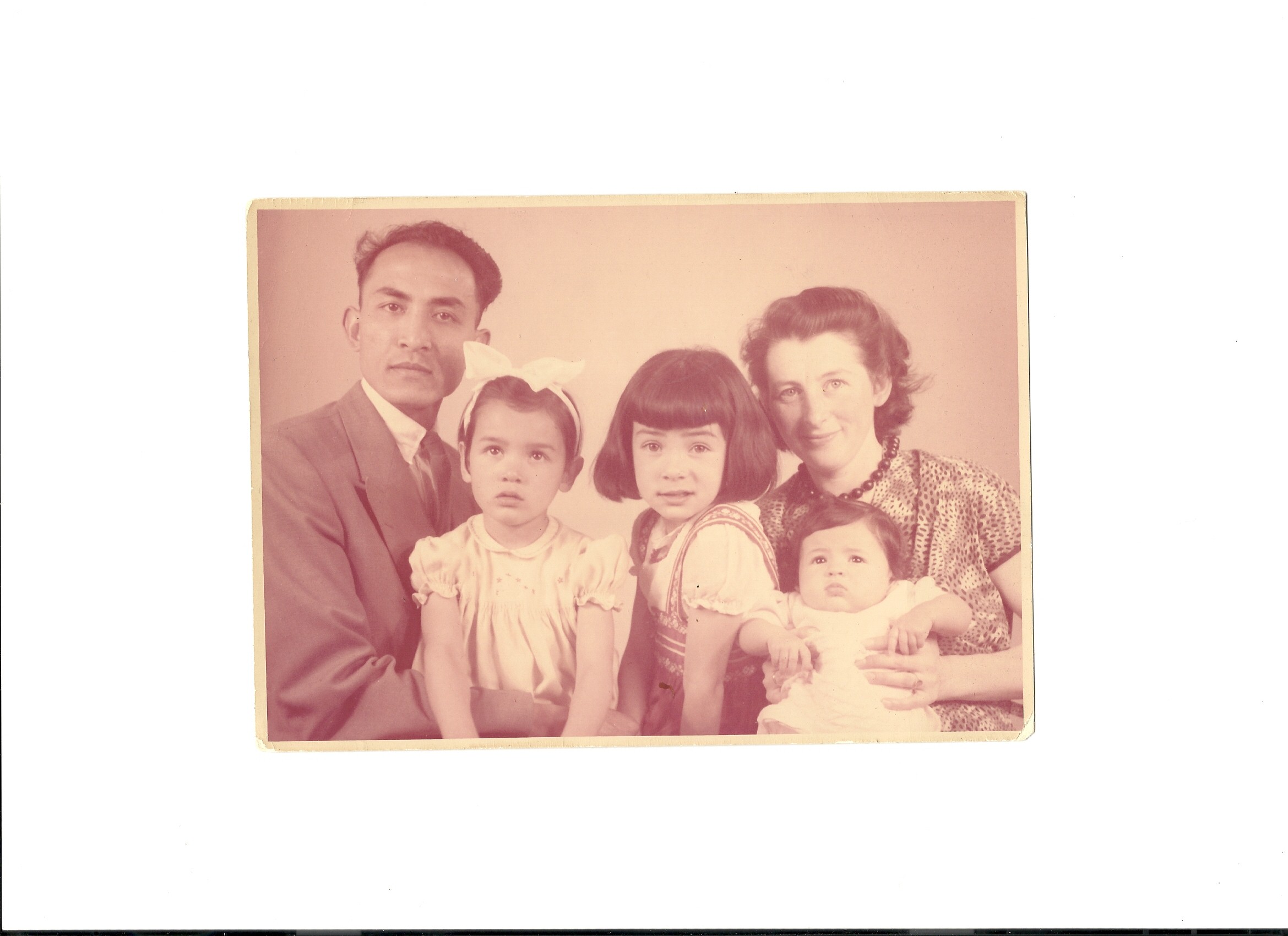
1956. A Diets-Vermeer family photo taken in Den Haag, Holland, a few months before destiny brought us to Ojai, California, the land of sunshine and orange orchards

Yesterday, while cooling off in Rainbow Bridge

August 20, 2012

Yesterday, while cooling off in Rainbow Bridge, sipping some kind of chocolate-frozen banana-almond milk smoothie, a woman I hadn’t seen in awhile sat down near me and said the most curious thing. She was asking about my family, my yoga classes, and then she wondered if I’d written any more books. I tried to explain that I was branching out into memoir writing. “That’s what we do when we get old,” I added, by way of justification. When I mentioned that the first one, “a kind of dating memoir,” was published a few months ago, and that I was working on another one, she gave me the most incredulous look. She said, ” You say you never leave Ojai — you hardly ever go out—how can you have that much to write about? I wouldn’t think that much has happened to you that you could write a whole book about your life.”

I’m sure she didn’t quite mean it the way it came out but it did sound like she thought that someone whose life was as boring and uninteresting as mine could not possibly fill up a whole book. But I always thought that if we all dug deep enough each and every one of us would have a rolling riveting story to tell. . . .a story that would blast the image we have of each other right out of the water. . . .

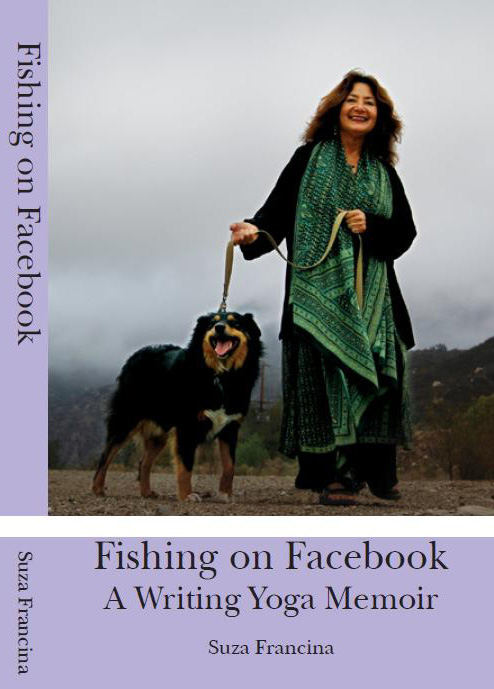
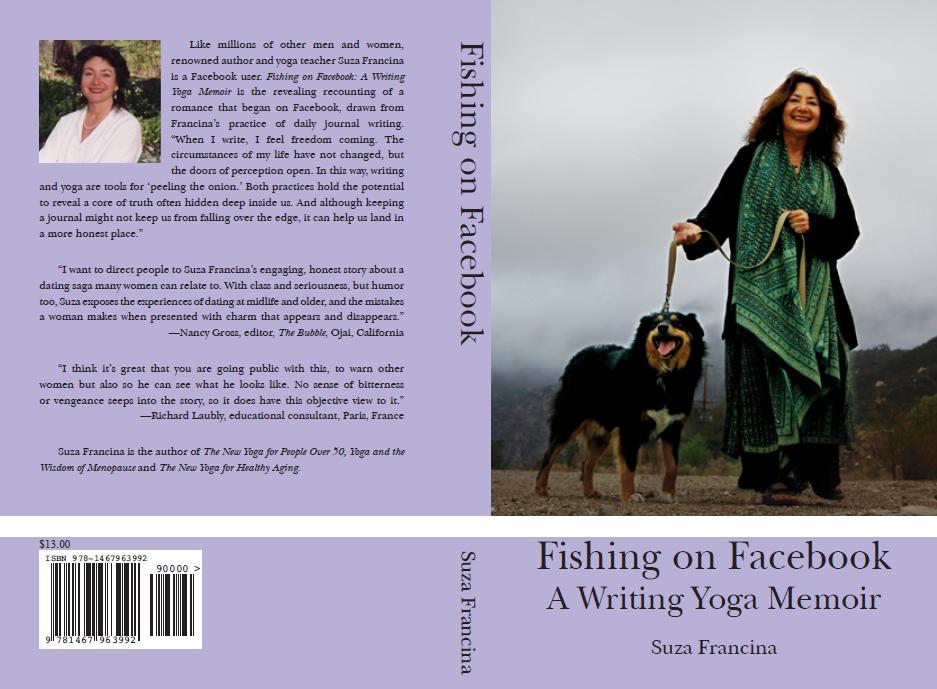
Fishing on Facebook: A Writing Yoga Memoir, How It All Looks a Year Later

August 15, 2012


You own everything that happened to you.
Tell your stories.

If people wanted you to write warmly about them

they should have behaved better.

—Anne Lamott
Last night I reread the last two Chapters of my memoir for fun—not to catch errors—and I found myself laughing and thinking, “It’s so good!” (I don’t have a publicist, so please forgive  this momentary lapse in modesty.)

I wrote on my Facebook page, “Laugh if you like, but the way out is through! Don’t suppress your personal stories. Bring them out into the light of day. Write in your journal . . . talk with friends who are a few miles ahead of you on the road of life, find a therapist you resonate with . . . whatever it takes ! Memoirs provide an opportunity for  writers to share aspects of themselves not possible in casual conversation and sometimes not even in a formal therapeutic setting. I’ve learned so much about the human condition from the memoirs I’ve read. Maybe you’ll learn something from mine.”
A few hours later, I spotted the above quote by Anne Lamott. I said to myself,  “Every time the idealistic-yoga-zealot-guilty-goodie-two-shoes-pentecostal-christian-daughter and the writer get in a fight in my head over whether I should say something or not, I’m gonna pull that quote out of my hat!”
Ever since I first published a draft of Fishing on Facebook on the Ojai Post and my blog, suzaji.com, about a year and a half ago, I’ve gotten a steady stream of public comments and  private messages. I’ve heard secrets (from both strangers and friends I’ve known for many years) that they might not have felt safe to confide to me had they not read my story.
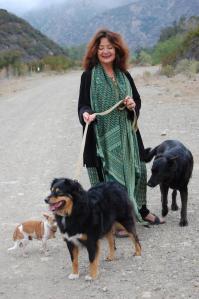
  After the paperback edition was published (in April 2012), on several occasions when I’ve walked in the door to teach a yoga class, students have told me that Fishing on Facebook was the most honest memoir they’ve ever read.  (Having read stacks of soul-bearing memoirs, I wouldn’t go that far, but I appreciate that they say this.) None of my fears around “What will my students think?” have materialized. On the contrary, they now feel more free to speak the truth about their own lives and share their own stories. Our social masks are falling away.

Here’s one excerpt from a yoga teacher’s response to my book, lightly edited to preserve her privacy:
Hi Suza,
We met many years ago at your studio. I would love to talk with you about your book. I have had the unfortunate experience of being involved with a yoga narcissist/ sociopath. It has been a long journey of dealing with him, and also with the yoga community embracing narcissism and this guy—and the others like him—and calling it spirituality.
In my case, he is a kirtan singer, welcomed into studios across the country and at yoga conferences to create “spiritual experiences” while being the antithesis of that behind the scenes. Plainly, he is a fraud. But for me to say this publicly—even to warn others—has not been a possibility.
I have had to retreat from the yoga community and watch while people make the choice to suspend their critical thinking and be drawn into what they want to be true.
I feel the yoga community is desperately in need of some self-reflection, looking at the hard things—not simply alienating the con-artists who prey on those seeking true spiritual insight, but questioning ourselves as a whole. Also, some self-defense against narcissists who find easy cover in spiritual disguises. As you know, even strong, smart, savvy women (and men) can fall prey.
Up to now I have mostly retreated from it as I watched yogi after yogi opt for star-power over integrity. It has broken my heart. I have been considering ways to confront this in a larger way within the yoga world as a whole. But I think now that others are coming forward with their experiences it may be the time to do something. (For example, teaching using the yamas* and niyamas *—ethical precepts—for self-empowerment to avoid narcissists. How to change your perspective without giving up your boundaries. Etc.)
As two people who have been around the world of yoga a long time before it was part of popular culture, I think it would be great if we could connect. Would you be open to sharing and hearing more about my experiences and thoughts? Maybe together and with others we could nudge this yoga life back from the “spiritual” precipice to be a bit more grounded. At least, maybe spare a few people from having to go through what we did.
I’d love to hear your thoughts. Thanks for putting yourself out there so bravely. I know how hard it is, and I appreciate that you have.


****


Finding my balance in nature

   A few days ago someone asked, “So how do you tell a sociopath from a real emotionally available man (or woman)?” My response is that at first it may not be easy to tell the difference. Even professionals in the mental health and legal fields can be duped. Anyone who thinks they can’t be fooled hasn’t met one of these charming, often highly intelligent characters, often involved in all kinds of good causes, environmental activism, politics, and spiritual and religious endeavors.

But as far as the dating/relationship world is concerned, had I done a background check on the antagonist in my book I would have seen from the get-go that he was lying about certain aspects of his life. So first thing is check the facts—do not assume anything. Alas, as my book illustrates and as many of us have experienced, when we “fall in love,” we tend to resist the notion that the person looking into our eyes and nuzzling our neck could possibly be lying!
Just now as I was feeding my four-legged menagerie I was thinking I hope people don’t think I’m all doom and gloom with all these writings about relationships that could be interpreted as negative. I can honestly say I’ve never felt more liberated and empowered in my life. I have my moments when I’m weary of having to deal with flat tires, clogged drains, a hovel that’s falling apart, no one to walk the dogs but me, etc., but those moments pass. If there is such a thing as past lives, this might be the first incarnation in which it’s even possible for me to survive on my own and be the master of my own fate. Perhaps singlehood is a golden opportunity that has yet to be fully explored.


From the Afterword:
So, what have I learned from all this?
I now have a deeper understanding of why women, for the most part, don’t speak out. Or if they do speak out, why they often wait for years, till something pushes them over the edge.
We do not want to risk not being believed. Or being viewed as vindictive. Or appearing gullible and naive.
Society gives the man a pass and asks her, “Why were you so easily duped?” [or the woman, as the case may be]

Our culture tends to blame the victim—”You should have known better!”—rather than holding the liar accountable. We yogis and spiritual types dream of becoming enlightened by chanting, doing our asanas, our breathing
practices, walking in nature, doing good deeds and imagining
love and light.
In years of yoga workshops, meditation retreats and relationship counseling the term “pathological liar” never came up. Yoga and other spiritual practices have the potential for expanding consciousness and giving some semblance
of inner peace, but we are fooling ourselves if we run away from the darker side of life.
All my adult life, the mantra, “look for the good,” has been drummed into me. The problem with looking for the good is that too often we do so at the expense of denying the bad.
Our great psychological challenge, both in human relationships and the wider world, is to see what actually is, without projection, without the veil of illusion, and thus see the mixed bag that all human beings are.
Psychologists point to the universal desire to hear, see, and speak no evil.  The problem with that desire is that we fail to recognize the true nature of people we encounter in daily life. Sociopaths have a mask which is used to fool others and to make themselves, on the surface, look like they are good people.


For Reviews and to Look Inside the Book:
 
Fishing on Facebook: A Writing Yoga Memoir is available at Made in Ojai, The Rainbow Warehouse, Soul Centered,  the Ojai Library, Barnes & Noble,  other bookstores, and Amazon.com.Notes:*Yama and Niyama are the ethical precepts such as non-violence, non-stealing, and truthfulness set forth in Patanjali’s Yoga Sutras as the first and second of the eight limbs of yoga.  The practice of yoga begins with Yama and Niyama, and extends into asana and the other limbs of yoga.