Archive for the ‘elder care’ Category

“Why don’t you ask that woman you slept with? She must know where your kimono is.”

January 23, 2013
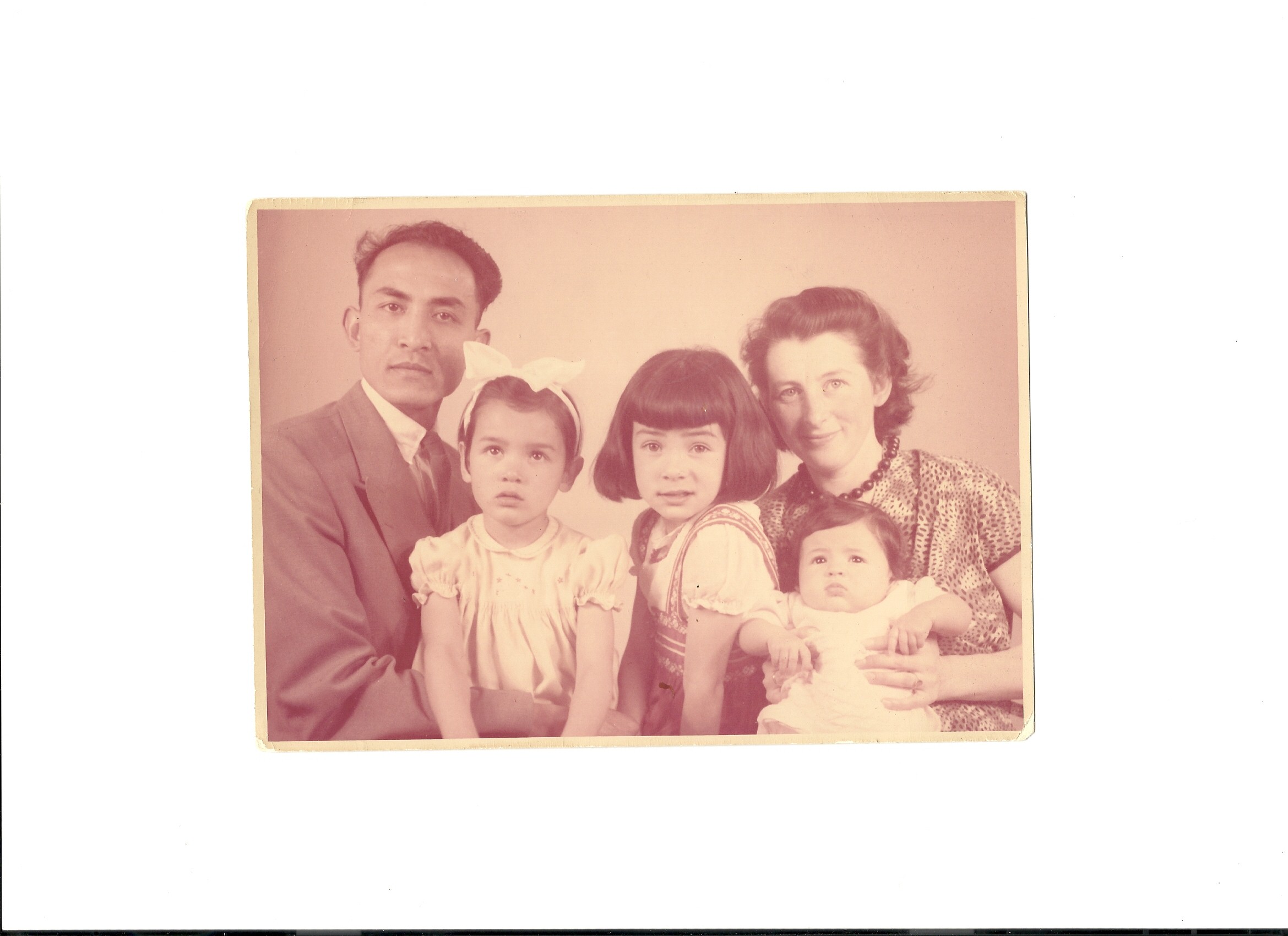
1956. A Diets-Vermeer family photo taken in Den Haag, Holland, a few months before destiny brought us to Ojai, California,  the land of sunshine and orange orchards

1956. A Diets-Vermeer family photo taken in Den Haag, Holland, a few months before destiny brought us to Ojai, California, the land of sunshine and orange orchards

This morning, while wiping up the pool of pee Chico left in front of the sliding glass door which was closed so the cats would not be eaten by coyotes, I noticed how I constantly remind myself that no one on this Earth has an easy life. If one fine morning an angel with a big house and a ranch for Honey scooped up my whole menagerie I’d have a lickety split clean house in 24-hours and time, energy, and cash to escape my monastic life. But like Gilda Radner famously said, “If it’s not one thing, it’s another.” As many others have pointed out, the only thing we can really control is our response to whatever comes down the chute. And I would not trade my troubles for anyone else’s.

Speaking of troubles, when I went to visit my old parents Sunday afternoon my dad was turning the house upside down looking for his kimono. Nothing makes him madder then when someone does not put an item back where it belongs. He kept muttering, “I can’t understand it. It’s supposed to be here.” My mom just sits undisturbed, with a slightly evil amused look on her face, while he looks behind furniture, lifts pillows, and rummages through the closet. She keeps right on reading de krant, the same Dutch newspaper she was reading my last visit and the one before that. Then suddenly, as he paces past her she looks up and jokes, “Why don’t you ask that woman you slept with? She must know where your kimono is.”

Turns out my dad needs his kimono because my niece, who is going to Beauty School, is coming to cut his hair. The niece arrives with a big black doctor-like bag filled with barber equipment. The kimono is found and she escorts my dad to the back porch where she sits him in chair and gets to work. And just like when I was a child I breathe a sigh of relief that the ogre is out of the house. I quickly sneak several slices of cheese to divide between Honey and Chico. I make myself a nice snack without him asking me three times if I washed my hands or telling me to use another plate.

When my mom gets wind that her husband is getting a hair cut she exclaims, “But then there will be nothing left!” She does not like that he’s doing this without her permission. She rises from her easy chair, grabs her walker, and then changes her mind and sits back down. But she turns her head toward the back porch and yells, “You can sleep by yourself till it grows back! And if it doesn’t grow back in a week you can buy a wig.”

When my dad comes back into the house he’s all smiles, with a spring in his step, looking all fresh and clean. “I feel so good, ” he says, over and over again, “I feel like a new man.” I make my escape early, guilt-free, while my niece and her older sister are still there, infusing my old parents with their happy, youthful energy. . .

(My mom, Maria Vermeer Diets, 92-years old on February 8, 2013)

478429_10151118544412521_856221748_o

Happy 90th birthday to beloved Ojai teacher David Essel

December 6, 2012

Last night I went to the 90th birthday party of my former teacher David Essel, who I met in 1966 when I was a shy, introverted student at Happy Valley School (now Besant Hill School).

The party was held at the Ojai Retreat and the room was filled with his lifelong friends. I planted myself right next to the birthday boy in a comfortable padded chair where I could sit cross-legged with a plate in my lap piled high with delicious vegetarian food. I listened intently while he told endless stories about old Ojai—the Ojai I knew as a child.

To the other side of David Essel sat the writer Catherine Ann Jones. Also sitting in our little huddle of guests was author David E. Moody and Mark and Asha Lee, founders of the Oak Grove School. Catherine asked the birthday boy what was it like to be ninety and he replied that he’s always felt ten years younger than his chronological age–he feels only eighty! He expressed surprise that his daughters were throwing this party for him so soon –he laughingly said they should have waited till he was a hundred.

In the course of the evening David Essel told the story of how he, Alan and Helen Hooker (of Ranch House fame) and Frank and Bennie Noyes (grandparents of Marla McFadin and Brian McFadin) came to Ojai in 1949, lured by Rosalind Rajagopal, Jiddu Krishnamurti, Aldous Huxley, Annie Besant, and the Happy Valley School. He remembered a young girl named Jan, the mother of Marla and Brian, who I can still see clearly in my mind’s eye. Jan was one of the early students at Happy Valley School when the campus was located just past the Ranch House, downhill from the Ojai Retreat.

I can tell you that David Essel’s mind is sharp. I saw no sign of either short or long term memory loss. I remember many of the people he mentioned and his recollections refreshed my own childhood memories of Beatrice Wood, David Young, Heather and Peter Young (parents of musician Martin Young and his sister Lindy) —and other Ojai pioneers, educators, and artists ahead of their time.

When the birthday cake was presented someone shouted, “Speech! Speech!” For a moment this youthful elder looked overwhelmed and at a loss for words. But then he gathered his forces and launched into a lengthy Life Review, as most of us are apt to do given the golden opportunity of an audience waiting for the cake to be cut.

David Essel described the stages of life, beginning with his childhood family life on a farm, growing their own food. He was allergic to cow’s milk so the family learned the art of milking goats. Then came the years in the marines and the awareness of the horror of war. He told a story about meeting a Japanese family, “the kindest, nicest people… the same people we had been killing…” He described how he went to school and studied animal husbandry–and how after he had to slaughter an animal he threw all his papers and schoolwork in the trash in disgust and became a vegetarian.

He told how the three people who influenced his life the most were his father, his wife, Mary, and J. Krishnamurti, for their impeccable integrity. David’s father spent time living deep in the woods and loved nature. He also recalled that when his father was still single he gave up a secure job so that his friend, who had a family, would not be laid off.

We never know how much we influence the life of another person but I know David Essel influenced mine. His sensitivity and kindness made a great impression on me. Like Beatrice Wood, who also rescued dogs and carried spiders outside, he taught in word and deed that all creatures, great and small, love their life as much as we do.

The interruptions to life’s best laid plans never end!

November 27, 2012

Monday, November 26, 2012

Scan_Pic0018

I’m telling you, having dogs (next to having kids) is the world’s best assertiveness-with-kindness training. In the time it took for me to do my morning ablutions, Honey and her black-wolf husband Nubio tore the stuffing out of my warm winter quilt while romping on my bed. The interruptions to life’s best laid plans never end!

Yesterday, after thoroughly enjoying myself at the Glen Muse Yuletide celebration, I felt fortified to spend the evening with my elders. Turns out my middle sister, the Boolie bully I lamented about in yesterday’s Post, was right. Our old parents do need more help.

When I managed to get my mom to unlock the door (by calling on my cell as I banged on the door) I stepped from the cold outdoors into a sauna. I’ve done home health care and end-of-life care off and on for almost fifty-years (since I was thirteen) and thermostats turned up to 100 degrees are a given for this job. Skeleton thin elders with poor circulation are always cold.

My dad was lying back bundled up in winter robe and wool socks in the special huge ugly sturdy $900 easy-chair my bully sister insisted on buying many months ago. Our parents were furious when she planted it in the center of the living room but now of course my dad dozes in it all day long.

The whole scene is like a European home frozen in time fifty years ago. The radio, turned to a classical music station, is fifty years old. If you open the kitchen cupboards you will find items like the flat wood silverware holder that came along with us on the ten-day boat trip from Holland to New York. My mom plays Dutch childhood songs on the piano for hours on end. There is no TV, no computer and they never check the answering machine Boolie bought them eons ago.

My mom always wants to know if I have a boyfriend. She laughed and perked up when I told her I had a date the other day with a very handsome man twenty years younger than me. My dad insisted he’d already eaten so I reheated a left over sweet potato for my mom, slathered it with raw organic butter to try to get some calories in her.

While she eats we banter back and forth about the ludicrousness of life. At one point her mind slipped and she asked if my dad was my father. “Well, ” I said, “if he isn’t, I advise you not to tell him!” She laughed so hard I got on a roll and asked her if she’d like me to take a paternity test. Our love for naughty jokes never ends!

I’ve resented her intrusion since the day she was born

November 27, 2012

Sunday, November 25, 2012

My first free Sunday in four weeks! After my yoga class I’m going to walk, walk, walk, and write, write, write. But first, I have to check on my old parents.

I made the mistake of answering the phone last night and got in a heated argument with my middle sister about our parent’s elder care. The stork delivered this interloper, nicknamed “Boolie” (pronounced “bully”) when I was two years-old. I’ve resented her intrusion since the day she was born. She thinks she is my superior in every way and delights in my failures as each of my fumbles proves she is right.

The sun is shining, the blazing red and yellow leaves on the trees outside my window are shimmering to the ground. The ever-present river bottom wind whispers in my ear, reminding me that all things on earth are transient and somehow I must extricate myself from the earthly messes I’ve created, whether they be present or past karma, possibly from lifetimes ago. Some say we choose our parents, our siblings, our whole life situation. . . that here on the wheel of life we are working out stuff from past reincarnations. Anything is possible —perhaps this lifetime all my past husbands are converging in Ojai to give me one last chance to be merciful and kind. . . I would launch into a long story on this but must clean the yoga room, feed my four leggeds and put on my yoga hat. For my students (who know me well and accept me as I am) I am almost always on my best behavior!


Bike Ride Part Two: Time for a Bath

September 9, 2012

After my trip through Meiners Oaks, I cycle over to my parents’ private, deluxe nursing home on Fairview Road. My timing is perfect, as my dad is trying to convince my mom to wash her hair.

My father and two younger sisters can handle almost every aspect of my mom’s care without me, except for one thing. I am the only member of the family who has succeeded in coercing my mother to sit on her shower stool and actually take a full bath. If you want to know how strong a thin, ninety-two-year-old woman can be, try moving my mom from her easy chair into the tub!

I tell my dad to relax—that I’ll handle giving my mom a shower. But first I have to butter her up. My mom asks the same questions over and over again. She can’t remember the last time she had a bath, what day it is, or who the neighbor is, but she still speaks five languages. Her favorite thing is teaching me Spanish. So I sit on the floor near her easy chair while she reads out loud from her lesson book.

After about ten minutes of Español and joking about my weight (my skinny parents cannot get over how fat I am), I nonchalantly suggest to my mom that this is a good time for a bath.

“A bath? Are you crazy? I don’t need a bath. Why should I take a bath? Do I smell?”

My sisters and I have threatened her a hundred times that if she doesn’t bathe then we will have to hire a stranger or put her in a nursing home. She poo-poos our threats and tells us to leave her alone. “Mind your own business. I can wash myself—I don’t need you!”

I finally get my mom up from her chair. At first she refuses to walk. She yells for my father to save her, and then curses him for being on my side. Then she yells for the police. Finally, she appears to throw in the towel and makes her way toward the bathroom, me right behind her in case she falls. Then, in the hallway, instead of veering toward the bathroom door she walks right past it and straight into her bedroom. “You are not as quick as you think!” she yells gleefully and quickly slams and locks the door.

My best strategy for getting my mom in the shower is to wait till she’s on the toilet and then steer her onto her shower stool right after she gets off the toilet. But it’s too late for that trick today.

Ten minutes later she opens the door, and angrily agrees to have her hair washed in the kitchen sink. I quickly clear the dishes, grab towels and shampoo, stick a basin in the sink, and fill it with water. Despite all her yelling that I use way too much shampoo and her threats to disown me, I love washing my mom’s hair and scrubbing her scalp and neck.

After she’s all rinsed and dried off, with her damp clothes removed and her bathrobe on, she orders me to get out of the house—now!

An hour later my father calls to thank me. I can hear my mom playing the piano in the background, her ordeal forgotten. “She smells so good,” my dad says.

A Bike Ride Through the Past

September 9, 2012

Riding my bicycle through Meiners Oaks feels like a long, strange trip through my past. My conscious mind is present, enjoying the balmy weather, the rural route from the river bottom to Mira Monte, but on the way home, as I pass the homes of childhood friends and other places that shaped me, all sorts of molecules of memory are unleashed.

There’s The Farmer and the Cook, in the building that once housed the five and dime store where I bought my first bottle of miracle Cover Girl make-up (to make my brown skin whiter), pale pink lipsticks, bags of curlers, and endless Noxema creams, hair spray, and lotions and potions to emulate the girls on the covers of Seventeen.

Next door to The Farmer is that house where I once saw my friend’s older sister making out on the couch with her boyfriend. I didn’t know what they were doing, but my Pentecostal brain recognized that this was surely sin!

A few blocks from The Farmer comes the house of my best fifth-grade friend, Brenda, who had diabetes and was short for her age but whom I envied because she was an only child with ten pairs of sneakers in all different colors, with matching socks, and cute matching pleated skirts, shirts, and soft wool sweaters that hung all nice and neat in her very own closet. She had more clothes than I had ever dreamed possible, as well as huge stacks of True Romance  and Archie and Veronica comics that went halfway up to the ceiling. Her parents were alcoholics, but I didn’t notice that . . .

Across from Brenda’s house is the trailer park where after school I helped an old man who was a friend of my parents . . . a lonely man who smelled of Old Spice and wore a St. Christopher medallion . . . a good Catholic who paid me to sweep the oak leaves off the deck, wash his dirty dishes, and help him with his laundry. His cupboards were filled with forbidden foods like Spam and Saltines and Nabisco Vanilla Wafers and Ginger Snaps . . . there was always a bowl of red Jello in his tiny fridge, and whipping cream that you sprayed out of a can—foods not found in my mother’s health-food kitchen. After my jobs were done, we’d sit on a bench at his table and eat goodies together, until one day when I realized I should not be sitting on his lap and what he was doing was wrong. A few weeks later, my mother showed me his obituary in the paper. I can still feel the shame and guilt that washed over me. For years I couldn’t shed the feeling that my abandoning this poor, lonely old man had somehow caused his death.

End times

August 31, 2012

Last night I rode my bike in the moonlight to check on my old parents. When I arrived around 9 p.m., the house was all lit up and they were eating enchiladas with rice and beans from Rob’s or Ruben’s. No doors or windows were open, and it felt like stepping into a sauna. My dad was engrossed in a lively conversation with my brother-in-law about end times, the signs of the times, the rapture, and the infinite wisdom of our heavenly father.

My mom had a dubious look on her face; she was leafing through the September issue of National Geographic on “What’s Up with the Weather”—all about record floods, endless drought, and “snowmageddon.” There was also a feature on Yemen entitled “The Days of Reckoning,” with horrific images of war. My mom stopped turning the pages . . . we saw a photo of a 12-year-old boy cradled by his mother. His eyes were not closed; he had no eyes, just sewn slits where once his beautiful, miraculous eyes had gazed out. He had lost his eyes to a sniper. I no longer ask my earthly father why our heavenly father allows this. Instead I found my mom’s walker and nudged her outside to look at the moon.

Faccia’s gentle passing

August 29, 2012

Today was the passing of our sweet little Faccia, the dog my daughter Monica adopted fourteen years ago.

Before time caught up with Faccia, she ran like the wind—the happiest, springiest dog on earth—so light on her feet . . . a joy to behold.

About two years ago Faccia’s hearing faded; gradually she slowed down, slept more, and walked less and less, just like an elder person in the last years. Her dog tag said, “THIS DOG IS DEAF.”

These past several months I have been watching Monica tenderly carrying Faccia around the yard like a baby. Her house looked more and more like a nursing home for elderly dogs. Yoga mats, blankets and pillows all over the floors to help prevent Faccia from slipping and to give her a soft place to land when her legs gave out . . . special easy-to-digest food . . . new raised dog dishes to made eating easier . . . barricades and fences so Faccia wouldn’t wander off and get disoriented or run over (one night a car backed over her, but somehow she was not injured) . . . special places to pee and poop . . . washing her when she messed on herself, just like an old person . . . Faccia waking up at night, crying and needing help to go to the toilet—just like an old person.

I said to Monica, half joking and half serious, “The way you take care of Faccia shows me how you might someday be taking care of me.”

Monica held Faccia during the night. We spent the morning quietly gathered around Faccia’s gently snoring body. Dr. Curtis Lewis, our longtime vet who has helped ease the end for many of our elder dogs, came to the house at noon.
Even though we knew the moment was coming, and we were ready, a flood of tears came . . .

Dr. Lewis is so kind and gentle . . . a few times Faccia raised her head . . . we watched the change . . . the final exhale . . . her passing was easy.

All afternoon, Faccia’s dear little doggy body rested under the kitchen table as usual, but her breath was no more.

In the late afternoon, Monica’s husband, Trevor, dug Faccia’s grave. As darkness fell, with the bright moon shining down, we gently returned her body to Mother Earth, deep under an oak tree.

Somewhere, somehow, I hope her spirit runs free.

Winter Solstice Liberation: Mahasamadhi, The Last Asana

December 22, 2011

 ????????????????????????????????????????????????????????

Winter Solstice Liberation: Mahasamadhi, the Last Asana

December 1987

In the end—and it will end—your life will seem to have sped by like a fleeting dream.

—Doris “Granny D” Haddock

The Winter Solstice is upon us. It was at this time of year, many years ago, that I rode my bicycle over to Eucalyptus Street, as I often did, to see my old friend Ruth. It was a crisp, sunny day after a long rain, and I was not really in the mood to be stuck indoors, but Ruth had called to say she had something important to tell me.

The moment I stepped inside, I could sense that something was up. Shirley, the next-door neighbor who checked on Ruth twice a day, was in the kitchen dumping oatmeal into the garbage disposal. She didn’t waste any words telling me what was going on. 

Ruth says she’s going to starve herself to death. But I’ll save these oranges just in case she changes her mind.”

What? What are you talking about?”

She messed all over herself again this morning. It’s the third time this week. After I cleaned everything up, she got back into bed, and now she says she’s not going to eat or drink another thing.

I think she had another stroke,” Shirley went on. “I’m not sure. She’s having memory lapses, but I know she’s serious about this. And she says if she waits much longer she might not have enough sense to make this decision.”

My mind flashed back to the many times Ruth and I had talked about death and ways of dying. But even last month she hadexcept for her fading eyesight—appeared so alert and vital. It was a challenge to keep up with her long, strong legs when I accompanied her on her daily walk to the top of Signal Street. We had gossiped like two teenagers about the lighter side of my love life. Her advice to me had been, “Forget about sex and get on with your life. You’ll feel so free!”

I could barely comprehend the gravity of what Shirley was saying. “The problem is,” she added, “she tries starving herself every time she feels like she can’t take care of herself anymore. This is the third or fourth time she’s threatened to do this.”

She’s never told me this. How long does she go without food?”

About three or four days, and then she feels better and starts eating again. But this time I have a feeling she’ll go through with it.”

Ruth had always done things her own way. Most of her friends would have checked into a nursing home by now, but I knew that Ruth would never give up her independence. Unmarried and with no children, she had supported herself as a PE teacher before retiring in Ojai. A Theosophist and lifelong student of esoteric and Eastern thought, she relished her autonomy and privacy.

I walked into Ruth’s bedroom. Her head was perfectly centered on the pillow, and the covers were pulled up to her chin.

Hi, Ruth. It’s me, Suza.”

Has Shirley told you about the trouble I’m making?”

She didn’t put it like that.”

You know how I feel. I want you to make everybody else understand. I don’t want to live like this!”

I bent down to give her a hug, but she pushed me away. “I want you to help make the others understand. Tell them to leave me alone!”

Ruth was dead serious, and her courage was contagious. “Okay, Ruth. I’ll help you, I promise.”

Coaxing someone as strong-willed as Ruth to eat was out of the question, and I’m not a fan of force-feeding. There were no nearby relatives to help out. Plus, after years of giving end-of-life care, I saw what was ahead. I didn’t want to sentence myself or Ruth to endless days of catheter draining, adult diaper changing, and the spoon-feeding of someone who might eventually no longer recognize me.

The last person I had taken care of, Ada, had been a close friend of Ruth. We had both known Ada when she was still a vibrant, artistic person. But at some point in her late eighties we began to see her slowly deteriorate. Ada didn’t want to live in a nursing home, and she hired me to care for her at home. The day came when her body was nothing more than a bag of bones. She didn’t want to eat. It hurt to breathe. She wanted to die in her own bed. Unfortunately, she didn’t have the energy or mental capacity to resist when well-meaning relatives checked her into the hospital. There, she was somewhat revived. From there, she was transferred to a nursing home where she spent three years strapped into a wheelchair before the end. Ruth and I both visited her regularly, but she no longer knew who she was or where she was.

While visiting Ada, I had seen dying people force-fed chunks of steak and potatoes. Ruth was still sane enough to know that, in a nursing home, the social norms of dying would be imposed on her. It would be almost impossible for her to choose her own way of death.

As if reading my thoughts, Ruth repeated, “Be sure, be darned sure, that everybody knows exactly how I feel.” As if to emphasize her point, she took out her dentures and plopped them into the glass of water on her nightstand. “I won’t be needing these.”

Her face shrank. Without the dentures she looked much older, but it didn’t matter to her how she looked anymore.

Can you still understand what I’m saying without my teeth in?”

Yes, it’s just fine,” I replied. “Please just take it day by day. Do what you feel like doing.”

Ha!” she interrupted. “If I do what I feel like doing, I’ll eat like a glutton.”

Not knowing what else to do, I sat quietly by her bed. Ruth’s room, where she had slept for more than twenty years, felt warm, pleasant, and familiar. There were no offensive smells of  urine and other people’s poop. After a while, I absorbed what Ruth intended to do and it started to feel natural. I recovered from the shock of it all. I held her hand, and it felt like holding the hand of a sick person that you want to encourage to recover. Only we both understood that this would be a different kind of recovery. Our hands were warm and relaxed. We had begun the process of letting go.

Day Four

Three days had gone by before I’d had time to visit Ruth again. She was already so thin from a lifetime of careful vegetarian living, and her spirit so stoic and serene, that I entertained the romantic notion that she would take pleasant leave of her body in just a few days. I envisioned myself holding her hand, just like in the movies. She would give me one last smile, then exhale and enter the great beyond.

When I arrived, a well-fed, oblivious attendant was sitting guard in the living room, engrossed in the TV and a pile of knitting. Shirley had posted a sign on the refrigerator saying, “Ms. Doak does not wish to be disturbed. Do not offer food or water. Only if she asks for it.”

Ruth was flat on her back in exactly the same position, the white sheets pulled tightly up to her chin. Her eyes were closed, but I could tell she wasn’t asleep.

Ruth, it’s me, Suza.”

Oh, good, I’m glad you’ve come.”

She opened her eyes and pulled down the covers. Already her face and arms were visibly thinner. We chatted about everything under the sun, just like old times. Eventually the subject came around to her “fast.” I circled her wrist with my thumb and index finger. “Ruth, you’re definitely thinner.”

Good!”

Are you comfortable?”

I’m very comfortable.”

Her sole request was that I wipe the dried skin from her parched lips. The water by her bedside stood untouched.

Well, what do you think of my little project?” she asked, flashing a toothless grin.

You mean dying?”

Yes.”

What could I say? That she was brave, sensible, courageous? Crazy?

Ruth, have you read about other people who’ve done this?”

Yes.”

We discussed certain Zen monks and other people who reportedly refuse all food, water, and medical attention when they feel ready to leave this world. “Most people don’t realize they have that option,” I commented. “Some spiritual teachers gather their family and disciples around them and just leave. Some even predict their exact moment of departure.”

Neither of us had the faintest idea how long the process would take. “Just make sure those attendants Shirley has hired know not to feed me,” Ruth instructed.

I looked at the calendar and counted 18 more days till Christmas. I promised Ruth that I would take time off from work so that I could be with her full-time the whole week before Christmas. Yet, even as I promised this, I doubted that she would survive until then. I also assured her that in a few more days I’d start spending the night and that she could call me at any time.

This is a good time of year to die,” she said softly. “It’s winter. I’m glad we’ll be together for Christmas. Christmas would be a good day to die.” 

What if you change your mind?”

She shook her grey head and looked at me like I was five years old. “Why would I change my mind? Why would I want to live like this?”


Day Five

I visited Ruth again on her fifth day without food or water. The scene was exactly the same. She was perfectly still in her bed, with the covers pulled up to her chin. Shirley was changing the sheets as often as necessary, and helping her to shower before putting a clean T-shirt and diaper on her. The room was immaculate, with freshly cut roses on the dresser.

Ruth consistently assured us that she was very comfortable and there was nothing she wanted. She had called up the few friends that would understand and told them goodbye. She was leaving it up to Shirley to deal with the few out-of-state relatives who hadn’t visited her in years.

What shall we talk about, Ruth?” I asked.

It’s such a long wait . . . Reading would help pass the time. Could you read to me from Kim?”

As I read, she occasionally interrupted to correct my pronunciation. It was during this hour that she lost her voice. By the time I left, she could barely whisper her request to have the dried skin wiped from her lips.

The warm winter sunlight felt good as I headed for home. It was a relief to step out of Ruth’s house and back into the stream of life. This was only the fifth day, and already I was weary of my friend’s dying process.

Day Seven

 A whole week had gone by. As I entered her room, Ruth lay motionless like an empty shell. I took her bony hand. “How do you feel, Ruth?” I asked.

For several minutes there was silence, and I thought she hadn’t heard me. Then, with great effort, she whispered, “I’ve looked forward to this for years.” I sat on her bed with my eyes closed and allowed myself to relax. 

Shirley interrupted our reverie. I offered to take Ruth to the shower while Shirley changed the sheets. Ruth clutched my arms and strained to a sitting position. It took a while for her to swing her legs over the side of the bed. I helped her remove her T-shirt and diaper, trying not to stare at her emaciated body.

These disposable diapers are great,” she whispered as she grasped the portable potty at her bedside to raise herself to an upright position. I put my arm around her and supported her down the hallway to the bathroom.

While Ruth lathered her lower body, I washed her hair and armpits. She liked the water full blast, and very hot. “Oh, the water feels so good. It feels so good to be clean . . .” It occurred to me that perhaps she’d been drinking water in the shower all this time, and that was why she hadn’t yet died of thirst. But I never saw her swallow a single drop. I dried her with her favorite pink towel and eased her skeleton back into a clean T-shirt and diapers. 

The shower had completely exhausted her. She thanked Shirley for the crisp feel of the clean sheets. Even with my ear right up to her lips, I could barely hear her.

I’m so lucky to have friends like you.” She asked us to pull the covers right up to her chin, then added, “You can leave any time you want.”

We kissed several times. “Goodbye, Ruth. I love you very much.”

And I love you.”

Days Eight and Nine

I returned late the next night and slept in Ruth’s living room. When I checked her in the morning, she was in an unusually happy mood. Perhaps she felt that her “little project” was nearly over. Yet I still had doubts that she could see it through to the end. I worried about her becoming disoriented. In a moment of weakness and hunger, she might ask an attendant for breakfast.

What day is it now?” she whispered.

It’s Friday.”

She looked puzzled. “It’s Friday morning,” I repeated. “It’s the beginning of your eighth day without food.”

It seemed to take her a few minutes to understand, or was she finally feeling the full impact of her intent? “Oh, the waiting takes such a long time . . . I can live a long time without fat on my body . . .” she finally whispered.

I took a deep breath. “How much longer do you think it will take till you’re dead?”

I don’t know. I try not to think about it. If I say four more days I might be wrong and still find myself here talking to you!”

Shirley rarely hired strangers for the night vigil, but several different women “babysat” during daytime hours when she or I couldn’t be there. The note forbidding any food or drinks remained posted on the refrigerator. Since Ruth slept most of the time, I don’t think any of the attendants actually realized she was starving herself to death.

On Friday night my boyfriend, Paul, came over. Ruth’s emaciated form didn’t faze him. Ruth was pleased to see him, and motioned for him to put his ear by her lips.

Aren’t you a chiropractor?” she whispered.

Yes,” he replied, unsuspecting.

Well, then,” she responded with a naughty look, “isn’t there something you can do to my neck to hurry things along?”

I can’t do that!”

Sure you can! I won’t tell!”

That’s easy for you to say! You’ll be free and happy. I’ll be in jail!”

Days Ten and Eleven

I always knew Ruth had the option of changing her mind. Yet I was shocked when she confided on the tenth morning, “Shirley and I talked about my fast again yesterday. Tomorrow I’m going to make a decision.” Then she added wearily, “I’ve come this far. Maybe I can see it through . . .”

Part of me resented that I might be going through this whole ordeal for nothing. Not that I wanted her to die, but if she began eating, and then changed her mind about living a month from now, I knew that Shirley and I would have a hard time finding the patience to help her again.

When I returned the next day, the look on Shirley’s face startled me. She informed me that the night nurse had never told the daytime attendant that Ruth didn’t want any phone calls. Two out-of-state relatives had called, and had begged Ruth to “eat a little something—sip some tea and try to hang on till Christmas so we can see you.”

Shirley was furious. She had consulted Ruth’s lawyer, who said that as long as Ruth was of sound mind she had the right to stop eating. “These relatives haven’t visited her in years!” she fumed. “I told them that if they talk Ruth into eating, we’ll put her in a rest home and they can just come and get her and take care of her themselves!”

Following the call, Ruth had drunk half a cup of chamomile tea. This turned out to be a blessing in disguise. That night, her urine smelled of strong chamomile tea, and she expelled foul-smelling gas into the toilet. When I thought she was finished, I half-carried her back to bed. As we sat talking, I could hear her insides rumble. That should have warned me to grab a diaper. 

Suddenly she whispered, “I think I have to go!” I pulled back the covers and frantically grabbed bunches of paper towels to clean her. Then I opened every door and window to air out the house. As I washed her and changed the bedding, I thought, “If Ruth keeps on living, someone else will have to do this job on a regular basis.” 

Just as I was about to put another diaper on her, it started again. I grabbed more towels and buried everything, sheets and all, in a double garbage bag. Cleaning her up the second time, I felt more convinced than ever that Shirley and I should encourage her to see this through to the end.


Day Twelve

Ruth’s mind is definitely still intact. On the twelfth day she whispers, “Have you heard about the commotion my fast caused on Sunday?”

Yes, I did!”

Well, everything is all right now. At first my niece didn’t understand, but now there’s peace in the family.”

That answered my next question. Ruth had taken in nothing but half a cup of chamomile tea in twelve days. Her withered face was serene as she whispered, “I’m so glad everyone understands.”

There was a full moon that night. We held hands for a long time. Again, there was that feeling of letting go—a long unspoken goodbye. Late that night, with the full moon shining on her shrunken face, she whispered clearly, “I feel the change is coming.”

About midnight she asked, “What day is it now?”

It’s Tuesday . . . it’s been twelve days.”

That’s a long time. I think it’s coming soon.”

I prayed that she would die this night.

Day Thirteen

I was feeling utterly naïve. I told myself to stop anticipating that Ruth was going to die soon. This morning both her regular doctor and her osteopath were coming to see her. They had both known Ruth for years, and Shirley and I had great hope that they could give us some idea as to how much longer she would live.

How’d you sleep, Ruth?” I asked.

I sleep the sleep of the dead.” She laughed at her own joke, and appeared incredibly alert.

The osteopath, a tall, solemn-looking fellow, arrived first. I assumed that Shirley had informed him of Ruth’s condition. After the long days of silence, his loud voice seemed to echo in the room. Maybe he thought she was hard of hearing.

How’s your appetite, Ruth?”

You stupid fool, I thought. He’s probably asked that same question for the last ten years. 

I took him aside. “Hasn’t Shirley told you that Ruth hasn’t eaten for two weeks?”

He shrugged and automatically continued his exam. He listened to her heart, took her blood pressure, and pronounced that everything was normal. I felt relieved when he finally took her hand and sat briefly by her bedside.

The doctor’s presence felt somewhat like the long-awaited arrival of the midwife at a home birth. “How much longer do you think Ruth will last?” I asked.

It’s impossible to say. All her vital signs are normal. It could be tonight or it could be a long time still.”

The MD arrived just as the DO was leaving. He was well acquainted with Ruth’s philosophy and, in prior discussions concerning death, had agreed never to do anything to prolong her life against her wishes. His main concern was that she be kept comfortable. “I won’t order any life-saving measures,” he assured me. “Ruth and I discussed this a long time ago. If you have any problems with friends or relatives, have them speak to me. Our aim is to keep her comfortable. Give her chipped ice or water if she wants it.”

He, too, checked her vital signs and confirmed that there was nothing unusual.

Do you want water?” he asked her.

No.”

Do you feel hungry?”

No.”

Are you comfortable?”

Yes. Very comfortable.”

Shirley was in the kitchen baking Christmas cookies. It didn’t seem quite right to be baking goodies with someone starving to death in the next room! I worried that the sweet, spicy aromas would arouse Ruth’s appetite.

A neighbor knocked on the door and asked if she could visit. She’d heard that Ruth was ill and might be dying. I went into the bedroom and asked Ruth if Mrs. Perry could come in. 

She motioned for me to wipe her lips, which are now completely shrunken inside her mouth. “Tell her she can come in.”

Like the doctor, this neighbor assumed that Ruth was hard of hearing. As soon as she shouted, “I came to say goodbye,” I regretted allowing her to invade Ruth’s sanctuary. But Ruth whispered back, with all the spunk she could muster, “I may be here a long time yet!”

The neighbor burst into sobs. “You’ve known happier times, haven’t you?”

Mortified, I pulled her aside and told her not to say things like that. No wonder Ruth didn’t want visitors! I escorted Mrs. Perry back into the kitchen and left it up to Shirley to get rid of her.

Closing my eyes, I waited for the room to feel peaceful again. “Ruth, I think we’d better post a sign over your bed that says I CAN HEAR YOU PERFECTLY. I AM NOT DEAF.”

They mean well.”

Day Fourteen

Like a midwife checking on a laboring mother long overdue, I peeked in on Ruth briefly the evening of the fourteenth day. She lay so still, and the spark of life in her dehydrated body seemed so faint that I placed my face close to hers to be sure she was still breathing. She was deep asleep, and I left the room without disturbing her.

A new attendant was watching TV. “How has Ruth been today?” I asked.

Oh, she just sleeps all the time. She never wants to eat.”

None of the attendants seemed to notice how close to death Ruth was.

When I returned later that night, Ruth was still sleeping. I really believed that tonight she would die. The house was deathly still, and for the first time I started to get the creeps. Shirley had decorated a Christmas tree, but even the blinking lights failed to dispel my sense of foreboding.

When it was close to midnight, Ruth woke briefly. I reassured her that I was spending the night. She clutched my hand and then sank back into her deathlike state. But sleep eluded me. I could hear Ruth fidgeting.

At around 2 a.m., she struggled to get out of bed to use the potty chair. I lifted her skeleton into an upright position. She moved so slowly, I feared she would collapse. She slumped over on the potty, but insisted on waiting there until a bit of urine finally dribbled out. I couldn’t comprehend how her kidneys continued to function.

Now I was really getting the creeps. Ruth’s eyes were glassy and unfocused. Her body continued to endure, but her spirit seemed to be ebbing in and out. It was 3 a.m. before I got her bones settled back under the sheets. Finally I, too, lost consciousness.

Day Fifteen

Christmas was only six days away. We had all grown weary of waiting for Ruth to die—especially Ruth herself. Her body was unusually restless this night, and I wished we’d rented a hospital bed with rails. Instead, we barricaded her into the bed with six chairs.

Again at midnight, she began to fidget as if her spirit were fighting to fly out of her body. I checked on her frequently. Fear gripped me. Why couldn’t her flesh release her spirit? Why couldn’t she relax and let go?

The house felt cold and eerie, and was filled with a foul, musty odor. We had invited death, but my instinct was to let life flow into the house. I opened all the windows and let the fresh air in. Ruth didn’t care how cold it was. I buried my own body deeper under the blankets.

At almost the exact moment as the previous night, I heard her struggling to get out of bed. The sight of her skin dangling off her bones was unnerving. She no longer had the strength to sit upright, and doubled over on the potty chair.

As I helped her to lie down, I prayed over and over, “Release this woman from her body.” But Ruth’s body continued its inherent task of surviving. Even her hair and nails were continuing to grow. Her heart continued its ceaseless repetitions—the senseless task of pumping life force through her dying body. I felt that the time had come to give Ruth a merciful injection, but had no idea what that would be or how to get it.

I couldn’t understand why she didn’t just die in her sleep. Was there something worrying her, something unsaid? Several times I asked her, “Is there anything else you want to tell me?” She always shook her head, murmuring, “No. No. No.” She seemed as perplexed to find herself still living as I was.

Day Sixteen

It had now been sixteen days. On this night I was so exhausted that I napped at home before going over for the night shift. Shirley had called earlier to say she had to leave by 9:00 p.m. When I woke up it was already past 9:00, and by the time Paul drove me over I was half an hour late and still half asleep.

As I walked in the door, I tried to assure myself that Ruth was asleep as usual and probably hadn’t even noticed that no one had been at home with her. When I entered her room, her bed was empty. My mind went blank. In panic, I quickly searched the bathroom. Had my worst fears of someone “rescuing” Ruth and rushing her to the emergency room come true? As I yelled for Paul, I saw that Ruth had fallen off the far side of her bed and was hanging face down, half-on-half-off the floor. She was tangled up in her bedding and it looked as if she had bumped her forehead on the nightstand.

Shaken, we maneuvered her back onto the mattress. Paul checked her pulse. Ruth was still in this world. I placed a cold compress on her head while Paul rearranged the covers. We had no way of knowing whether she’d fallen just after Shirley left or soon before we’d arrived. She could have been hanging off the bed like that for more than half an hour!

Ruth began to fidget in a state of frustrated agitation. She coughed and spat, then motioned frantically for a Kleenex. She spat up globs of mucous several times, being very careful to spit only in the Kleenex and not make any mess. I didn’t know if she was coughing and spitting because she had been lying face down or if this was the death rattle I had heard about. Then she wet her diaper. I thought, If she’s dying, why change it? Why disturb her? But, being uncertain, I asked her to lift her bottom while I arrange a new diaper underneath. She seemed to understand everything. I hoped she wasn’t angry that no one was here when she fell out of bed.

She remained restless. I felt how sick and tired she was of still being alive, and cursed myself for not getting rails as we made another barricade of chairs around her bed. We had to keep moving her back to the center of the bed. Later on I realized that we were witnessing the final moments of her spirit wrestling with her body for release.

Then Paul took charge. Like a labor coach, he held her hand. “Let go,” he whispered. “Let go.” 

Ruth pursed her lips and motioned for the Vaseline. I asked if she wanted me to clean her mouth with a wet cloth. She shook her head vigorously. Absolutely not. For the last time, I wiped her lips. I had done all I could. Once more I said goodbye, and then left her alone with Paul. I could hear him softly talking: “Be at peace, Ruth. You’re going somewhere beautiful . . .”

Later he told me that she had stared intently at him for a long time. She had squeezed his hand as much as she had strength to and then turned her head away. He’d had the strong impression that she wanted him to leave, that she wanted to die alone.

Winter Solstice Liberation: The Last Asana, Mahasamadhi*

When I woke up it was Sunday at 4 a.m., the morning of the Winter Solstice. Ruth must be dead, I thought. But then I had thought that so many times before. I examined her closely in the dim light of her night light. Still unsure, I woke up Paul. He turned on the overhead light. Ruth’s head was perfectly centered on the pillow. Already she was turning yellow. Paul checked her pulse. He closed her eyes and covered her face with the sheet. Ruth was gone. This time she was really dead.

I called Shirley. Upon hearing the news, she told me that Ruth had been unusually alert and talkative the previous afternoon, and that they’d had a wonderful, warm final visit.

Ruth’s doctor arrived to sign the death certificate. [When did Paul leave?] An ambulance arrived to take the body to be cremated. Ruth hadn’t wanted a funeral.

I walked up Signal Street in time to see the sun rising above the snowcapped Topa Topas. It was an incredible relief to be alive and out in the open air.

Now, years later, I think about everything that I experienced in helping Ruth to leave her body while awake, aware, and alert. I close my eyes and clearly see Ruth’s image. I can still see her striding vigorously up North Signal Street with her long, strong, independent legs, a smile on her face. Looking back, I see that spiritually I was just a child. I didn’t fully grasp the great gift Ruth was giving me by asking me to be her guardian through her last days on Earth.

* * * 

Mahasamadhi (the great and final Samadhi) is the act of consciously and intentionally leaving one’s body at the time of death. [1][2] A realized yogi (male) or yogini (female) who has attained the state of Nirvikalpa Samadhi (enlightenment) will, at an appropriate time, consciously exit from the body and cease to live. This is known as Mahasamadhi. Each one prepares for and enters Mahasamadhi in a unique fashion.

* * * 

Adapted from Suza’s forthcoming memoir, Ojai Stories. A version of this story appears in the book, Sixty Seconds: One Moment Changes Everything, a collection of stories by Phil Bolsta. Foreword by Caroline Myss. Atria Books, 2008. 
suz9

Ojai Stories: Massaging My Old Dad on Saturday Night

July 27, 2011

“We are on our way out, Suzanne,” my dad reminds me. “Your mom and I are on our way out. We are two old people clinging to a little raft adrift in the sea… Someday you will be old. Then you will recall this moment and know what it’s like to be us.”

My dad’s skeletal form looks so small lying in bed, his bony brown arms poking out of the covers. Sometimes when I drop by to check on him,  his breath is so silent I stand still and watch, to be sure he is still here. There is a porta potty on each side of the bed he shares with my ninety-year old mom, one for him, one for her. The nightstand on his side of the bed has a few powerful meds, some for pain, some to help him pee. The meds have kept his raft afloat for two years since the doc first announced he had prostate cancer.

My dad turns over on his side, facing away from me. I lie down on top of the white sheets and massage his bony back. “Ah, Suzanne, that feels so good. You have healing hands Suzanne… I’m not afraid to die Suzanne… heaven will be so beautiful… like paradise before the fall. ”

Knowing my love for animals, my dad always assures me, “There will be animals in heaven, Suzanne. The lion will lie down with the lamb. There will be every kind of animal, gorillas and orangutans. You will see your dogs in heaven, Suzanne. Heaven is not just a spirit world where we do nothing. It is a real world without sin. We will not eat flesh. When Man fell, all the animals fell. In heaven all the animals will eat grass… “

These days I don’t fight with my dad about anything. I don’t bring up my favorite argument that if we won’t be eating animals in heaven, why do we eat them now?

While I press my fingers along his bony spine and back rib cage, he reminds me again how I always got the short end of the stick growing up. “I was so busy working, Suzanne. I know I failed you. I ask for your forgiveness.”

As I relax into massaging my dad, he talks and talks. His voice is still strong. He is still the Patriarch of the family with strong opinions about everything. I quell the flickers of outrage I feel over the years of disparity between how he treats me and how he treats my youngest sister, the blatant favorite of his three daughters. There will be no real resolution this lifetime. Maybe next lifetime he will be my child. It’s all a Great Mystery.

“My heavenly father is waiting for me Suzanne… The Lord has been real good to us, Suzanne. This world is going to pot. We are living in end times Suzanne. Don’t you worry… the Lord is watching it all.“

I’m not even tempted to ask why God doesn’t stop the insanity. I just let my old dad talk.

My dad is a survivor. He survived three and a half years of forced labor and brutal beatings with wet ropes and baseball bats in a Japanese prison camp. I marvel how he laughs when he describes how for amusement the bored guards forced his fellow prisoners to pummel each other till their faces were bloody and swollen. He ate bugs and grubs for protein while the allied prisoners, not used to meager rations, died all around him. “The Americans died first Suzanne… they were not used to living on a low calorie rice diet.”

My dad was reduced to a walking scarecrow but, he says, the hand of God was on him. One morning he was transferred into the mountains behind Nagasaki to work in a coal mine. A few days later as he was looking off into the distance toward Nagasaki, he saw a huge mushroom cloud rising over the city. The city was annihilated by the atomic bomb. While millions of humans melted and soil turned to glass, my dad survived.

My dad often tells the story of the day that was like the resurrection. How suddenly all his cruel tormentors vanished and he saw airplanes flying low through the mountain pass where the coal mines were located. He saw by the markings that the airplanes were American as big drums of food, medicine and other supplies floated from heaven into the prison camp under a canopy of white parachutes. I can imagine the tears of joy flowing down his face as he thanked God for the American saviors that delivered him from hell on earth. At that moment the seed was planted that someday he would find a way to come to America.

After the Japanese war machine came to a halt, my dad survived the humiliation of being treated like a dark skinned outcast by the British, confined in an enclosure like a prisoner all over again. Thankfully, he was transferred to an American ship where he was treated like a human being and free to move around.

After recovering his strength at a recuperation camp, and being of mixed Dutch-Indonesian parentage,  he had a choice of going back to Indonesia or repatriation in Holland. The hand of God moved him across the ocean to Holland, where he met and married my blue-eyed mother. Nine months after their official union, I was born.

Seven years later, with a sponsor in New York, we were on a boat headed for America. Upon arrival there was a telegram announcing that the original plans for the Diets family had changed. My dad was told we were being sent to Ojai, California. He had never heard of the place but he’d had a prophetic dream about living among orange trees.

We landed on Thacher Road in a house in the middle of an orange orchard. My dad believes the dream in Holland was a message from God that Ojai was our destiny.  After five years of going to night school and days working in  orchards, building rock walls, and odd jobs working for east end neighbors like Beatrice Wood, my dad became the accountant for Thacher School. Over the years his vow to pay back the Americans who saved him from the hell of that prison camp high in the hills above Nagasaki, was realized.

We reminisce about all this as I massage him. He tells me that “Your mom and I reminisce every night about when you kids were little… Life goes by so fast Suzanne… it’s just a moment in eternity. “

Now I understand what my dad means when he says life passes in the twinkling of an eye. When I’m at my parent’s house my whole life feels like a dream. I lie on my old bed and I’m twelve years old again, totally unconscious, plotting how to sneak out of the house.

My dad has apologized a thousand times for being so hard on me. “You were the first-born Suzanne. We did our best but I failed you.”

Tonight I don’t feel angry when he says this. I forgive him for throwing my Bob Dylan and Joan Baez records in the trash. I forgive my mom for reading my journals and snooping through my stuff and yelling at me when I came home from the Haight Ashbury.

Tonight as I massage my dad he wonders out loud about all the men I’ve been with over the years and why  my marriages failed. “Was there something wrong with you or was it them… or was there something wrong with both you?” He asks. It’s unusual for him to talk to me like that, so I seize the moment and get a lot of stuff off my chest.

For a moment my mind drifts to when I was eighteen and pregnant. I remember how I had dreams about dolls in my underwear. That was a prophetic dream too but my dad did not think it was the hand of God. That was the hand of the devil.

“Dad,” I say, laughing, “I was much too young to get married at age eighteen. That’s why that marriage failed. I was just too young dad….Besides, all those men I was with were all pot smokers…”

“But,” I add, now serious, “You’re right. You did fail me. All the psychology books say a daughter’s relationship with her dad is critical influencing who she marries….You just were never there for me dad. Plus, I was so confused.”

“You are so right, Suzanne….I hope you will forgive your old dad….”

We laugh and change the subject. Now he tells me stories of his childhood in Indonesia. “I love animals too Suzanne. I had pet birds. I taught them to talk and sing and hunt other birds. One day, I don’t know how it happened, one of my birds flew into the bubbling oil… I tried to save it but things were so primitive back then….cooking over an open fire. “

In the span of two hours our whole lifetime flashes before us. Back in the present we talk about his trouble peeing. I tell him again how he should try bending his knees and resting with the soles of his feet together. I lift up the sheets and try to maneuver his bony brown legs into the Lying Down Bound Angle yoga position but that’s just too weird for him.

“Some day you will be old too Suzanne, ” he says again. ” Then you will know what it’s like…” I give up on ever teaching my old dad a single yoga pose. He’s already outlived some of my teachers and many of my students. I forgive him and my mom for never taking my classes. I forgive their utter disinterest in my interests. I remind him that he must tell me when he is in pain. That he does not need to suffer. That there are wonderful pain medications now.

Then we talk about my mom and how we are not going to put her in a nursing home after he goes. He asks me, “Do you believe in anesthesia?” I know he means euthanasia.

I tell him again about my experiences with dying people. “If you’re ready to die, you can gradually stop eating… that’s natural euthanasia, ” I say.

He tells me again how he wants me to be there when the time comes. Suddenly he sits upright. “I feel so good Suzanne. I’m hungry! I’m going to get up now. Thank you for massaging me….Tell your mother I’m coming into the kitchen.”

A few minutes later he’s sitting at the table, barking at my middle sister not to use that small frying pan to fix the tofu. He tells her exactly how to reheat the rice and tofu in the micro wave.

“Dad,” we joke, “If this was an institution they would not let you eat this late.” “Late?” he retorts…it’s not late. Come on…in Indonesia we eat late at night, when the day cools off.”

 First in a round of new short stories about Life in Ojai
 
More stories on Suza’s website www.suzafrancina.com